


Iceland has exactly one breed of sheep, and by the time dessert arrived I knew how every single one of them spent its year. That is the kind of lunch the Taste of Iceland Demo & Dine turned out to be: part cooking demonstration, part farm lecture, part very effective travel ad, with a piece of perfectly pink lamb at the centre of it all. The festival, organized by Inspired by Iceland, made its Vancouver debut from November 11 to 14, and its Friday lunch set Icelandic Master Chef Hafliði Halldórsson loose inside Hawksworth Restaurant at the Rosewood Hotel Georgia, where David Hawksworth has held court since 2011. I attended as a hosted media guest of Taste of Iceland, and I will tell you now that the pitch is a good one.
The Chef and the Sheep
Chef Hafliði did not so much introduce Iceland as vouch for it. Raised on a sheep and dairy farm in the Westfjords, he is a former manager of the Icelandic Culinary Team, the national team that competes in international culinary competitions, and he still mentors it. He opened with what he called the facts that make Icelandic farming unusual, and the first one was the sheep. There is one breed in the entire country, the Íslenskt sauðfé, a descendant of the North European short-tailed family, and by his account it has been isolated on the island for at least a thousand years. He said the same protection applies to Iceland's cows and chickens.
A closed gene pool means no easy fix when you want better lambs, so Icelandic farmers did the patient thing instead. Every individual animal has been documented for centuries, and about 25 years ago that data went online, which lets a farmer compare their flock against everyone else's and decide which genetics to bring in. He credited that system with lifting meat yield by 30 percent per animal, which is a remarkable number for a country with no new bloodlines to lean on. Fertility rate gets tracked just as closely, since it drives the economics of a sheep farm.
Then there is the calendar, which reads like a children's book written by a very organized farmer. The ewes spend winter indoors (Icelandic regulation requires it, and winter in Iceland is not a polite season). Lambing happens in May, which counts as early spring there. Come June, the ewes and lambs are let loose to roam the highlands with no fences, free to eat whatever they like, which in early summer at that latitude means fresh grass and new sprouts and herbs. In September and October, farming communities ride out together to fetch every animal back down, a communal effort that can stretch to a week and one that has become popular with visiting tourists. What does all that wandering do to the meat? Chef Hafliði pointed first to the freedom and the wild vegetation, and noted that Japanese guests tend to mention umami before anything else when they taste it. He also pointed to age: Icelandic lamb goes to market young, at around four to six months.
Food
Chef Hafliði cooked and talked us through a three-course lunch at Hawksworth on Friday, November 13, with a wine pairing printed for each course (I only really drank the first, the Grüner Veltliner):
- Baked Icelandic Cod with celeriac, cod sauce and lovage (2023 Weszeli Grüner Veltliner, Langenlois, Kamptal, Austria)
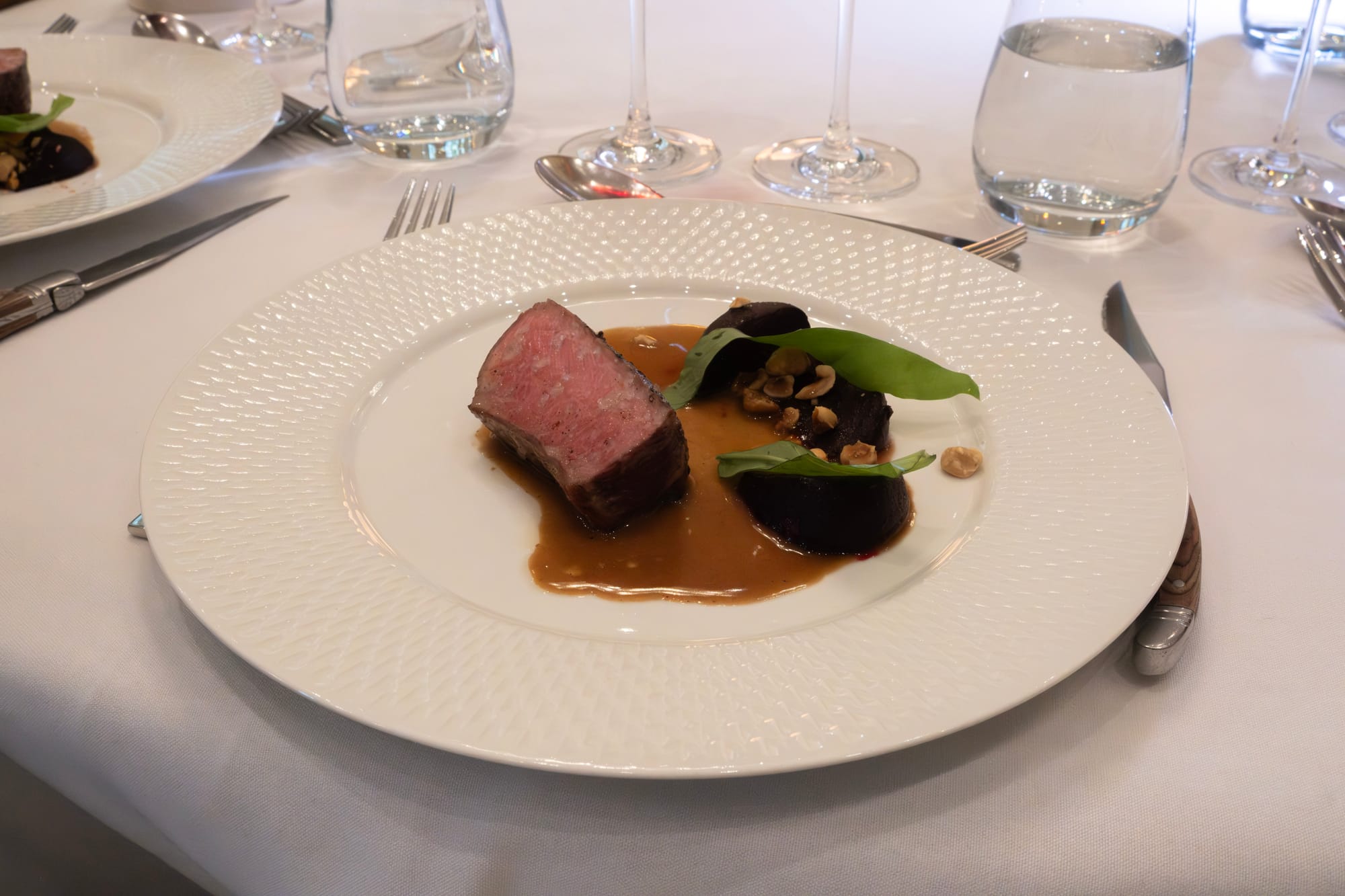
- Grilled Icelandic Lamb with fillet lamb sauce, glazed beets and fermented plum (2024 Mandrarossa Nerello Mascalese Sentiero delle Gerle, Mount Etna, Sicily, Italy)
- Whipped Skyr Ganache with strawberry, white chocolate and lemon cake (2015 Jorge Ordóñez & Co Moscatel Victoria #2, Málaga, Spain)
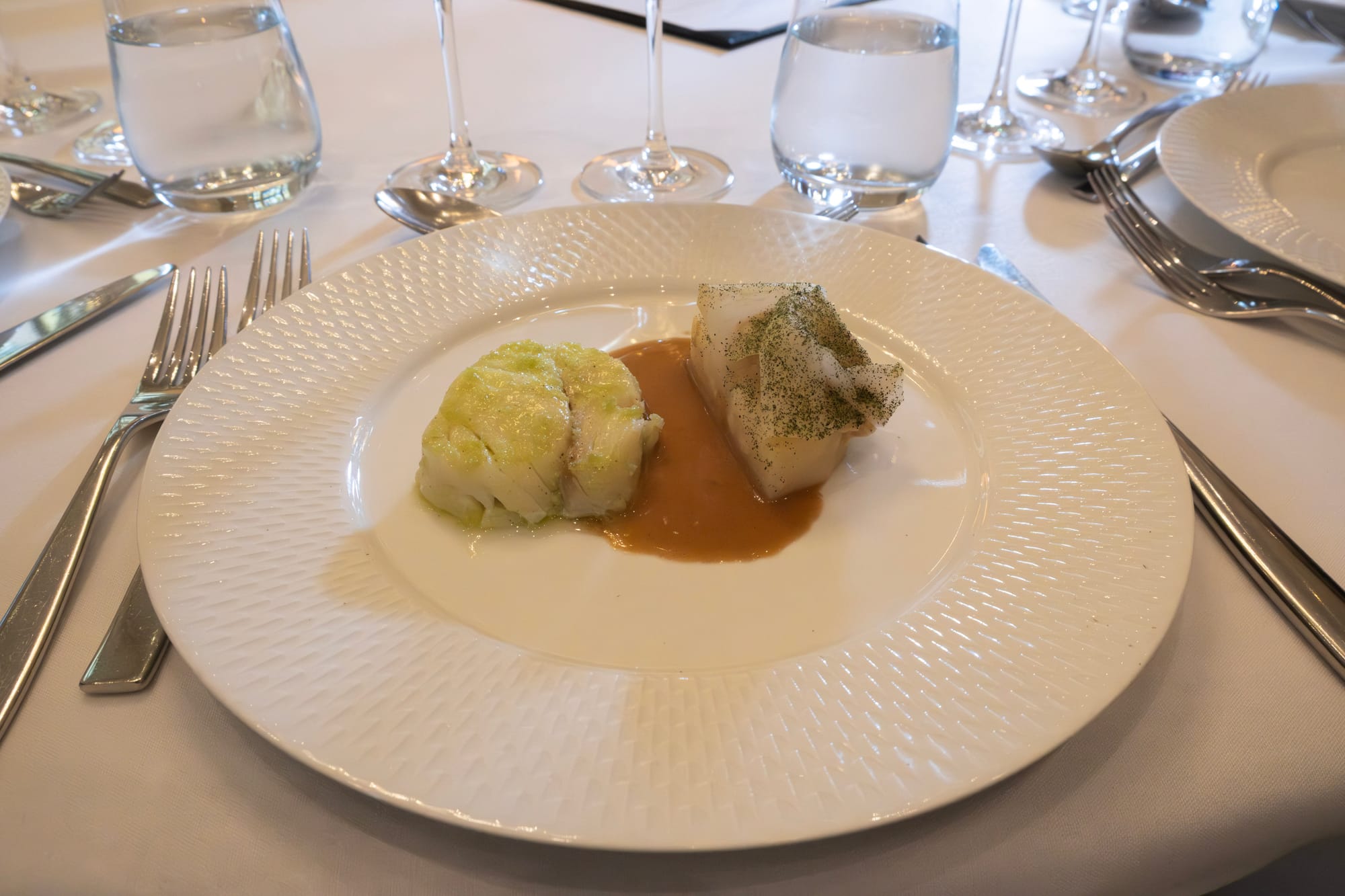
The cod arrived as one tidy piece on a wide white plate with a woven texture around the rim, like a very expensive pillowcase, wearing a pale green coat the colour of the inside of a savoy cabbage leaf. Beside it sat a hollowed celeriac husk piled with more sliced celeriac, the translucent slices dusted with a fine green lovage powder, and a pool of amber sauce ran between the two. It was a no-knife-needed affair: the fish gave way in clean flakes with every cleave of my fork, and it carried an extra savoury mouthfeel that the midtones of the Grüner Veltliner balanced perfectly.
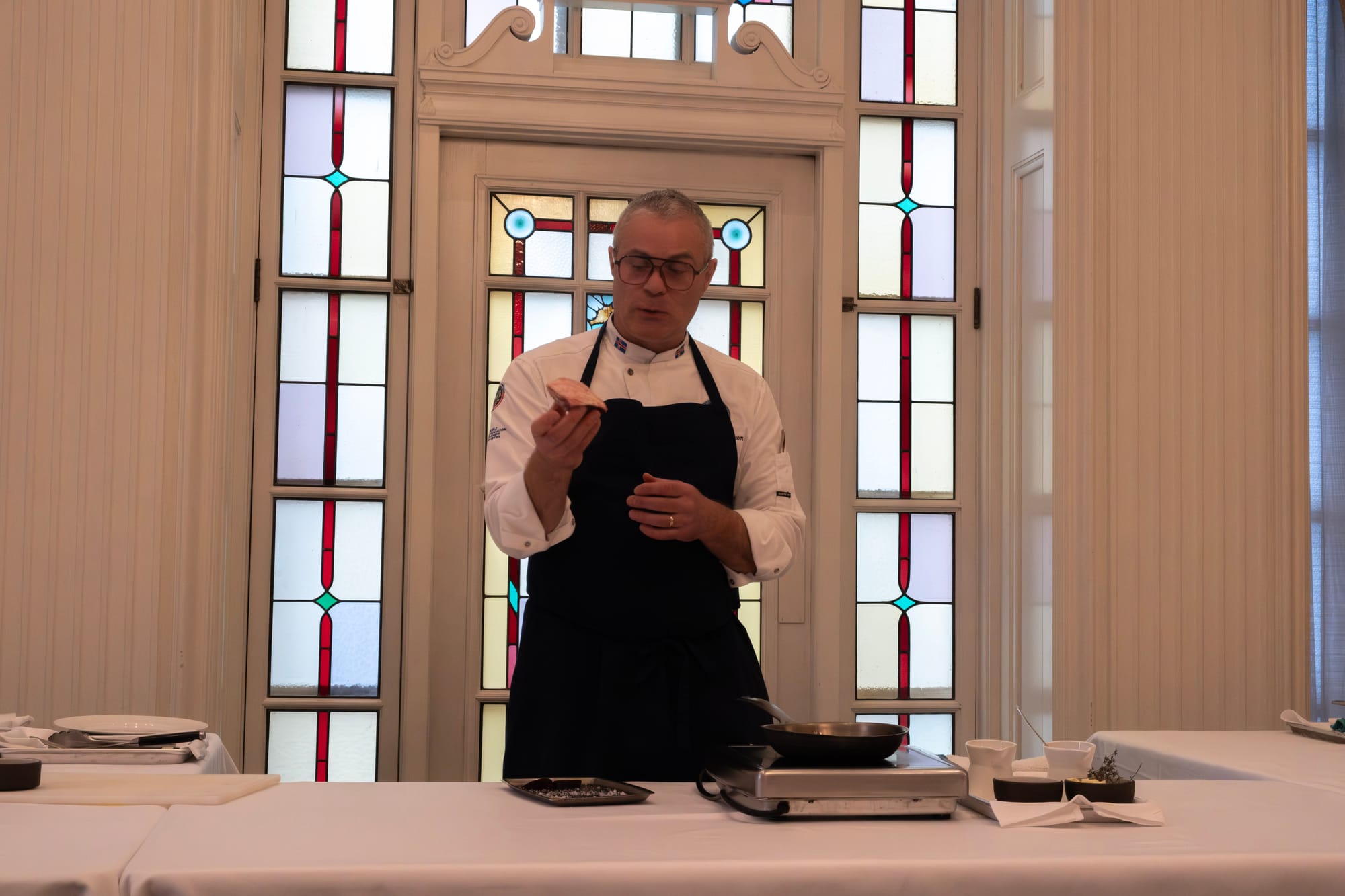
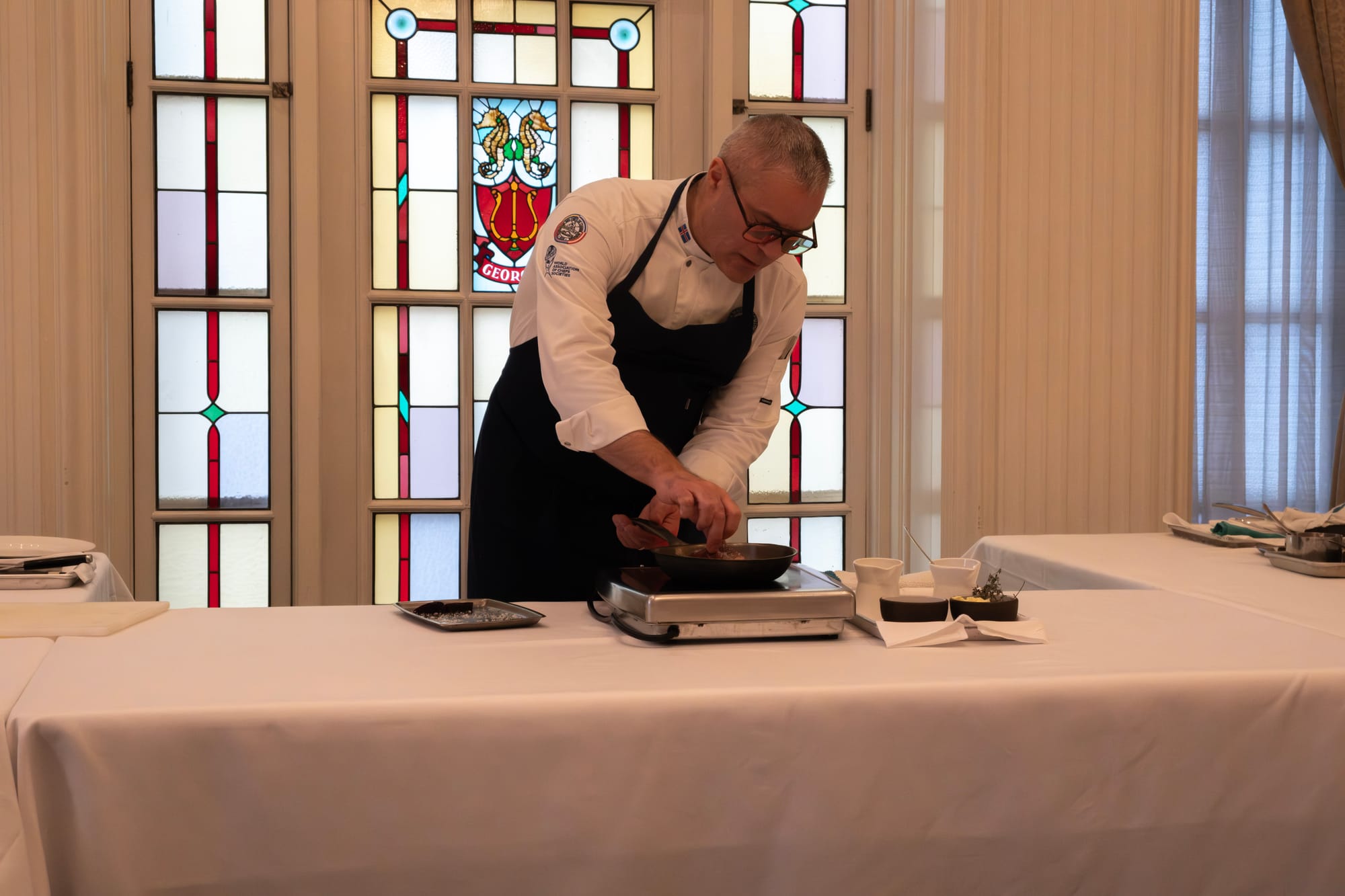
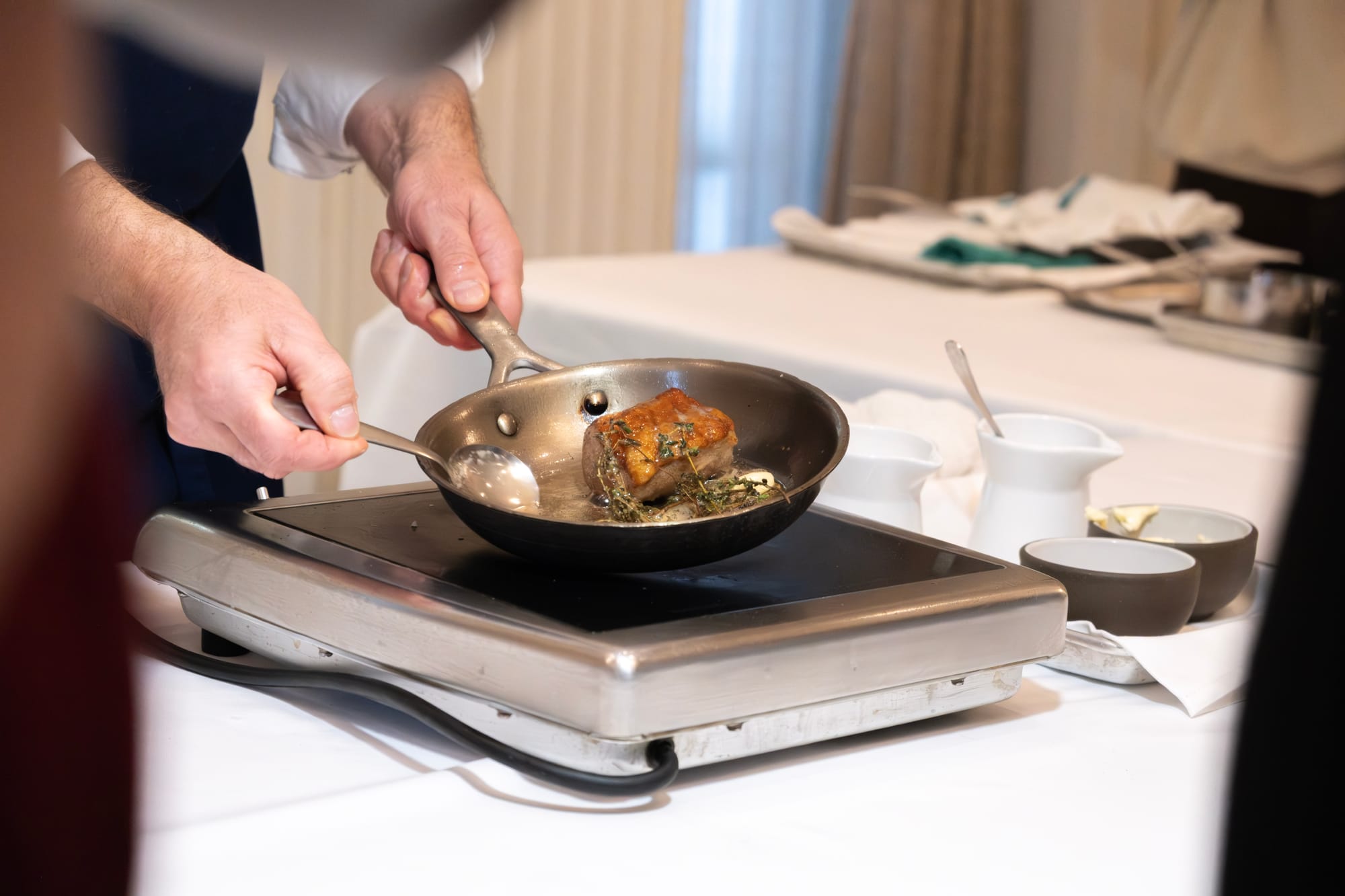
The lamb was the main event, and it started as theatre. Chef Hafliði held a raw piece up in front of the stained glass like a jeweller inspecting a stone, then salted it before it touched the pan, because seasoning meat or fish ahead of time gives you better browning on the surface (AKA the Maillard Reaction). He compared rendering the fat cap to how you would handle a duck breast, starting on medium heat.
From there it was thyme, butter, and a spoon working the pan juices over a top that went a deep, glossy gold.
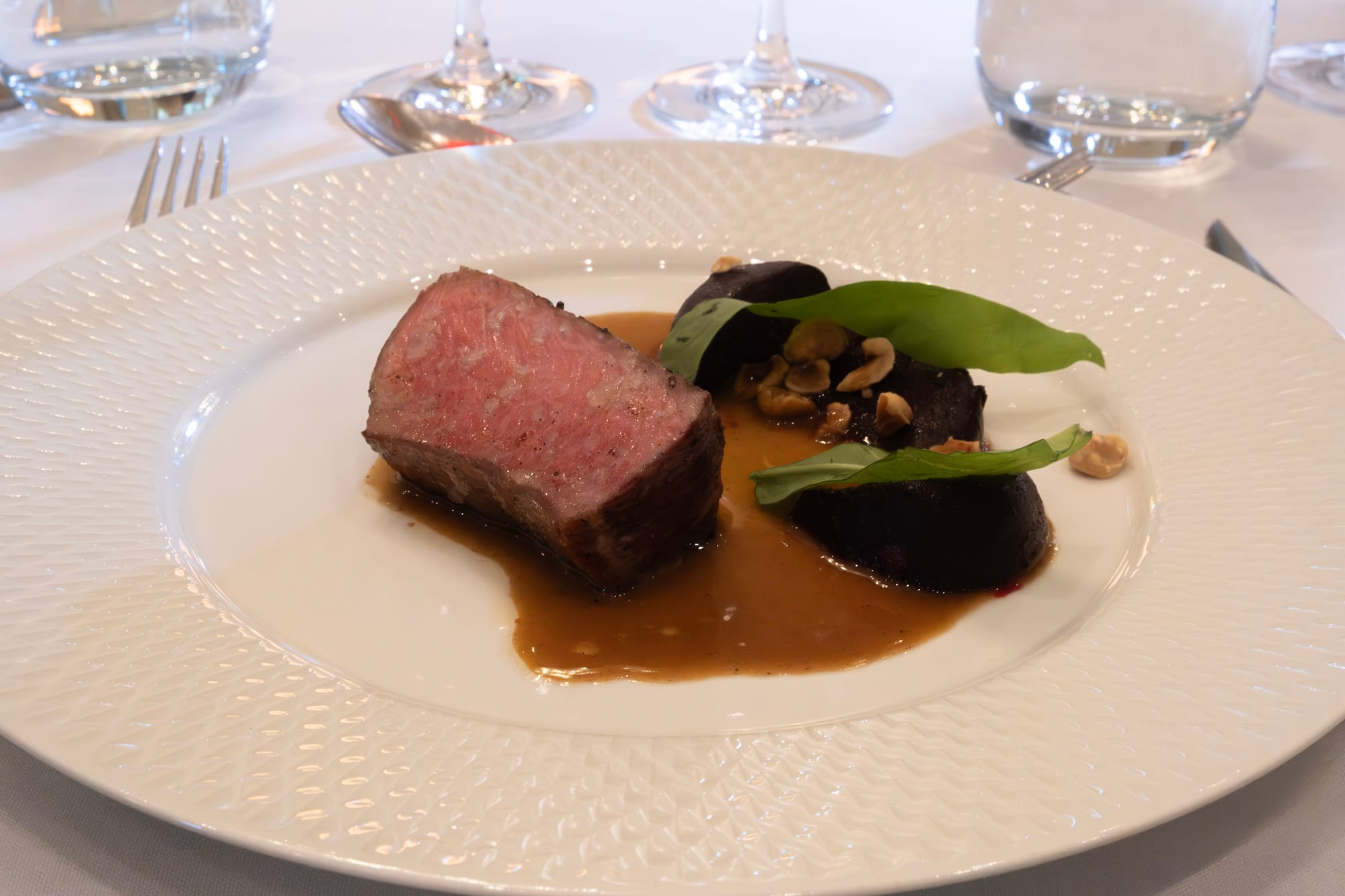
The plated version was a study in two colours and a sauce. A thick cut of lamb sat rosy pink through the middle under a thin, dark, salt-flecked crust, beside two halves of glazed beet so dark they read as nearly black, finished with what looked like toasted hazelnuts and a single green leaf laid across like a bookmark. Amber lamb sauce pooled under all of it. The lamb itself was extremely tender, with just a whisper of the gaminess I am used to from regular North American lamb. I loved the root vegetables, which gave the whole dish an earthiness that would sit right at home inside a Viking house in Iceland, a real restaurant I have been to on my travels. Knowing that these animals spent a summer wandering the highlands picking their own lunch made the plate feel like the last chapter of a story I had just been told.
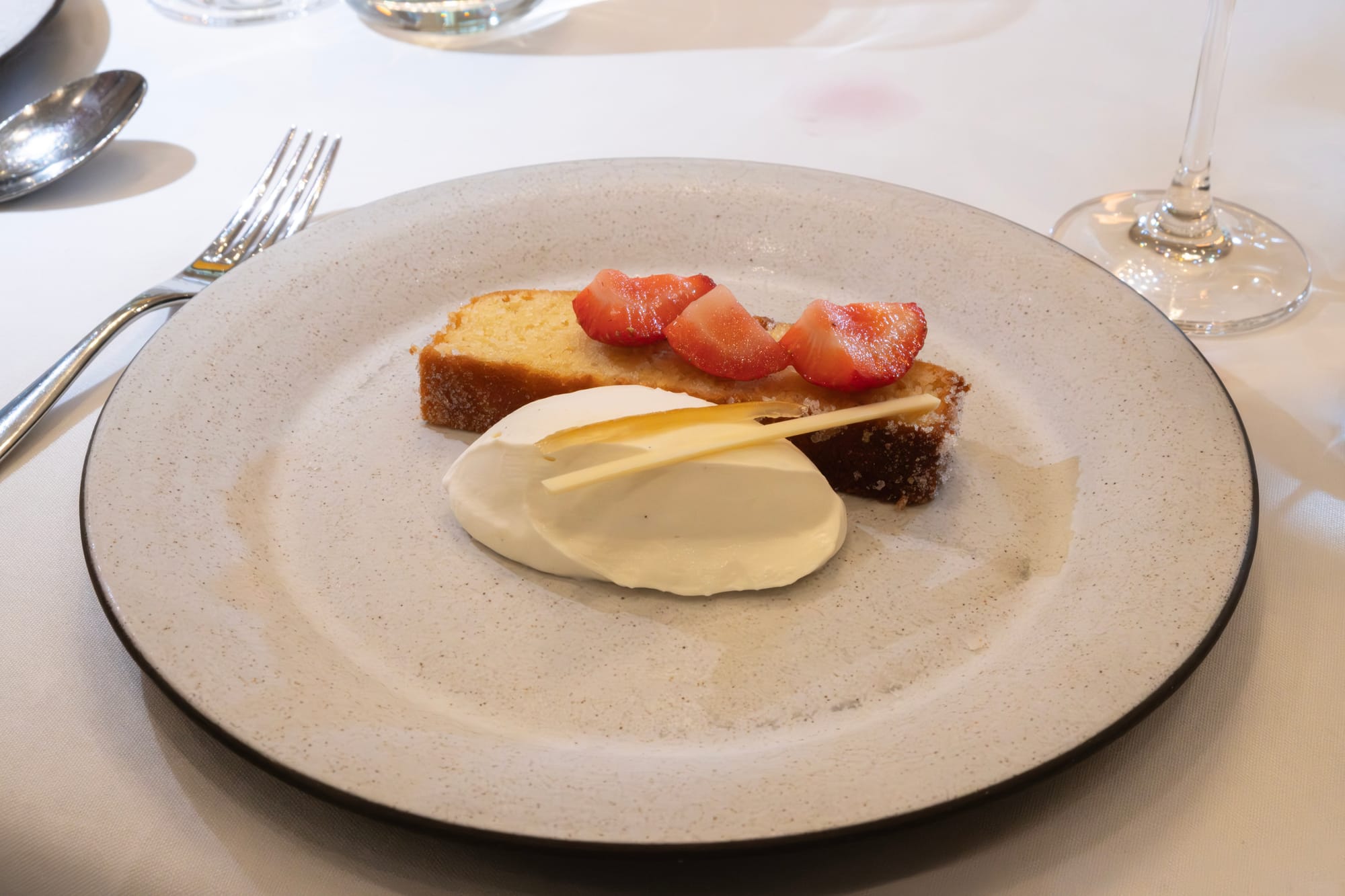
Dessert switched plates, from the white porcelain of the savoury courses to a speckled stoneware plate with a dark rim, and it looked deliberately casual. A slice of lemon cake with a sugared crust carried three glossy wedges of strawberry, a smooth quenelle of whipped skyr ganache sat beside it, and a long shard of white chocolate leaned on the cream with a thin shard of lemon tucked behind. Chef Hafliði described skyr as a daily staple for plenty of Icelanders, one that pairs naturally with chocolate and fruit and brings a gentle tang that keeps a dessert from tipping into sweetness. He called it a really simple dish, and said that all we would do was plate it. The whipped skyr was very elegant, much more elevated than any skyr I have had from the grocers in Iceland. Imagine Greek yogurt without the chalkiness and that is what skyr is meant to be.
Ambiance
The setup was demo kitchen meets formal lunch, and an intimate one at that, with only 15 guests. The lighting was dim, the way you would expect at a fine dining seminar. White linen tables were arranged around a single portable burner, with small dark bowls of butter and thyme within reach, and a lit pillar candle glowed near the front of the room. Place settings were full fine dining: stemware, a steak knife with a wooden handle and a stack of cutlery per seat. A pair of framed emoji prints on the wall, a red chili and a lemon, were a playful counterpoint to all that heritage.
Planning Your Trip to Iceland
Lunches like this are marketing, and they know it, and it still works. Taste of Iceland is a travelling festival run by Inspired by Iceland, a public-private platform owned and operated by Business Iceland, and the Vancouver stop packed in jazz, a cocktail journey, an aurora talk and a photography exhibition around the food. Icelandair also advertised a special round-trip rate from Vancouver for the festival.
I have been to Iceland before (my Moss Restaurant review is proof), and everything I loved about it during my travels was represented in this lunch. I love Scandinavian culture juxtaposed against massive mountains, waterfalls, glaciers and geothermal pools, and those are things you can only experience by planning a trip there yourself.
Chef Hafliði's calendar doubles as a trip planner. Lambing runs through late April and May. The flocks head for the highlands in June. If you want to see the whole system in motion, aim for September, when the sheep roundup (réttir) happens and visitors are welcome to join in; ask your hotel or host whether one is on near where you are staying. The best first stop for ideas is inspiredbyiceland.com, which is also where the next Taste of Iceland dates and events get posted.
Final Thoughts
One-liner: A story-first lunch that made Icelandic cod, lamb and skyr taste like postcards from the place itself, with the only real side effect being a sudden urge to price flights.
Highlight: The Grilled Icelandic Lamb with glazed beets.