


Most tasting menus keep you in one place and ask you to imagine the rest. Le Monument hands you a map. A brass menu stand carries the silhouette of Portugal and asks guests to wait for their guide to start the journey, which turns dinner into something closer to a rail trip with a very good dining car. Chef Julien Montbabut, a Frenchman who earned a Michelin star in Paris before settling in Porto, reinterprets the classics of each Portuguese region with a modern hand, one stop per course. The restaurant sits inside The One Monumental Palace, a 1923 hotel on Avenida dos Aliados, and holds one star in the 2026 MICHELIN Guide Portugal. We booked the day before on a whim and were surprised at how easy it was to get a table.
Food:
Team Tastic came here for a weeknight dinner in June and on the Grande Viagem (Big Journey, €180 per person) menu, I enjoyed the following. The restaurant also offers two shorter menus: the Passeio (Trip) at €140 and the Caminhada (Saunter) at €110.
- Puff bread with salt flower
- Petit trois: aubergine, octopus and organic egg
- Vila do Conde: edible crab, Savora mustard, yuzu
- Portalegre: red snapper, fennel, saffron from Lagar do Clavijo
- Algarve: violet prawn, green curry
- Matosinhos: sardines, peppers (served three ways)
- Bread course
- Madeira: bluefin tuna, tomato, chives
- Açores: giant squid, fetticus, ink sauce
- Peniche: sole, artichoke, coffee
- Bairrada: suckling pig, curd cheese, orange blossom
- Douro: autochthonous sirloin, blue lobster, red wine from the Douro
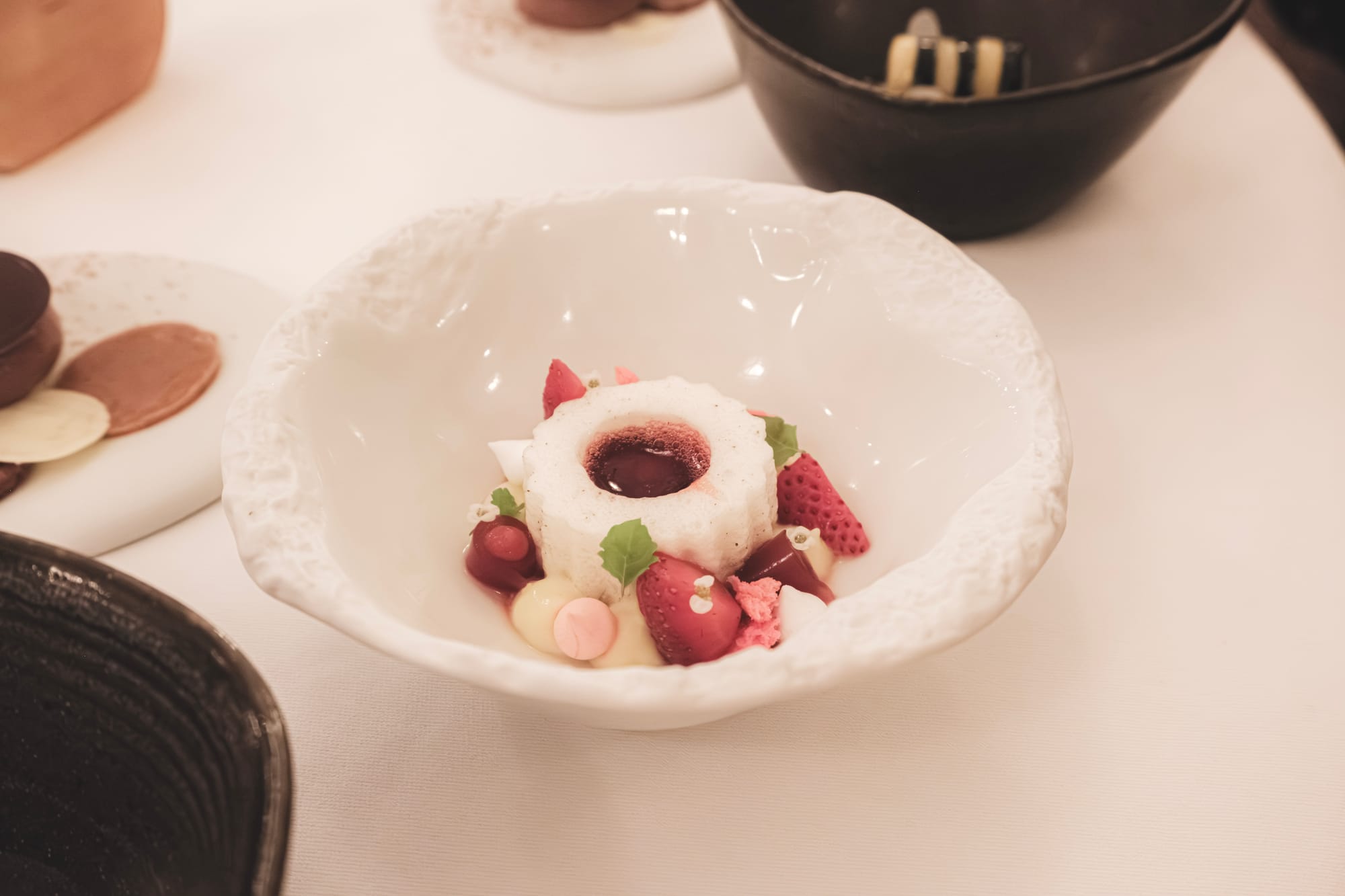
- From Joana: organic strawberries from Douro, verbena
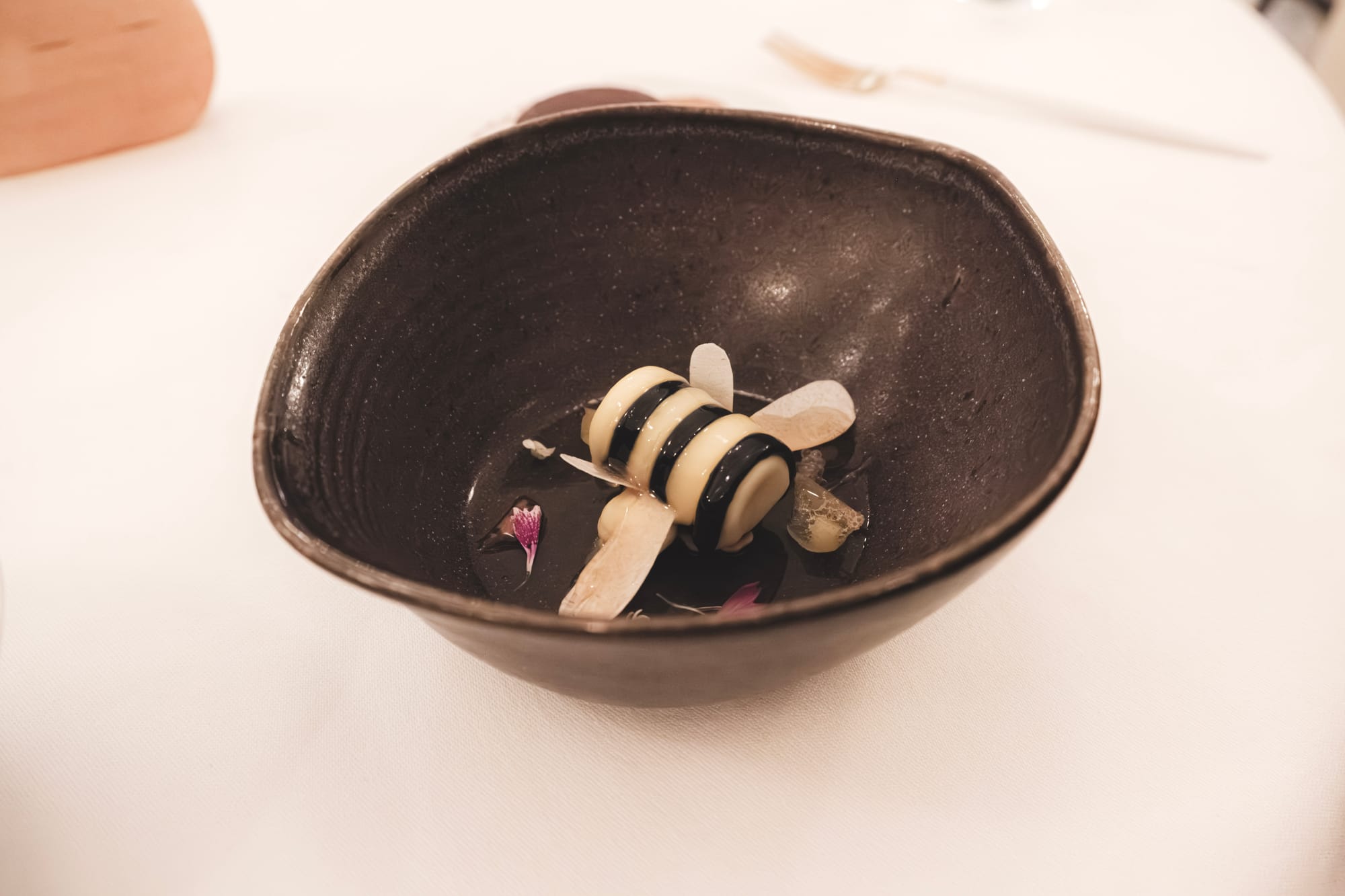
- From Joana: honey from our hive
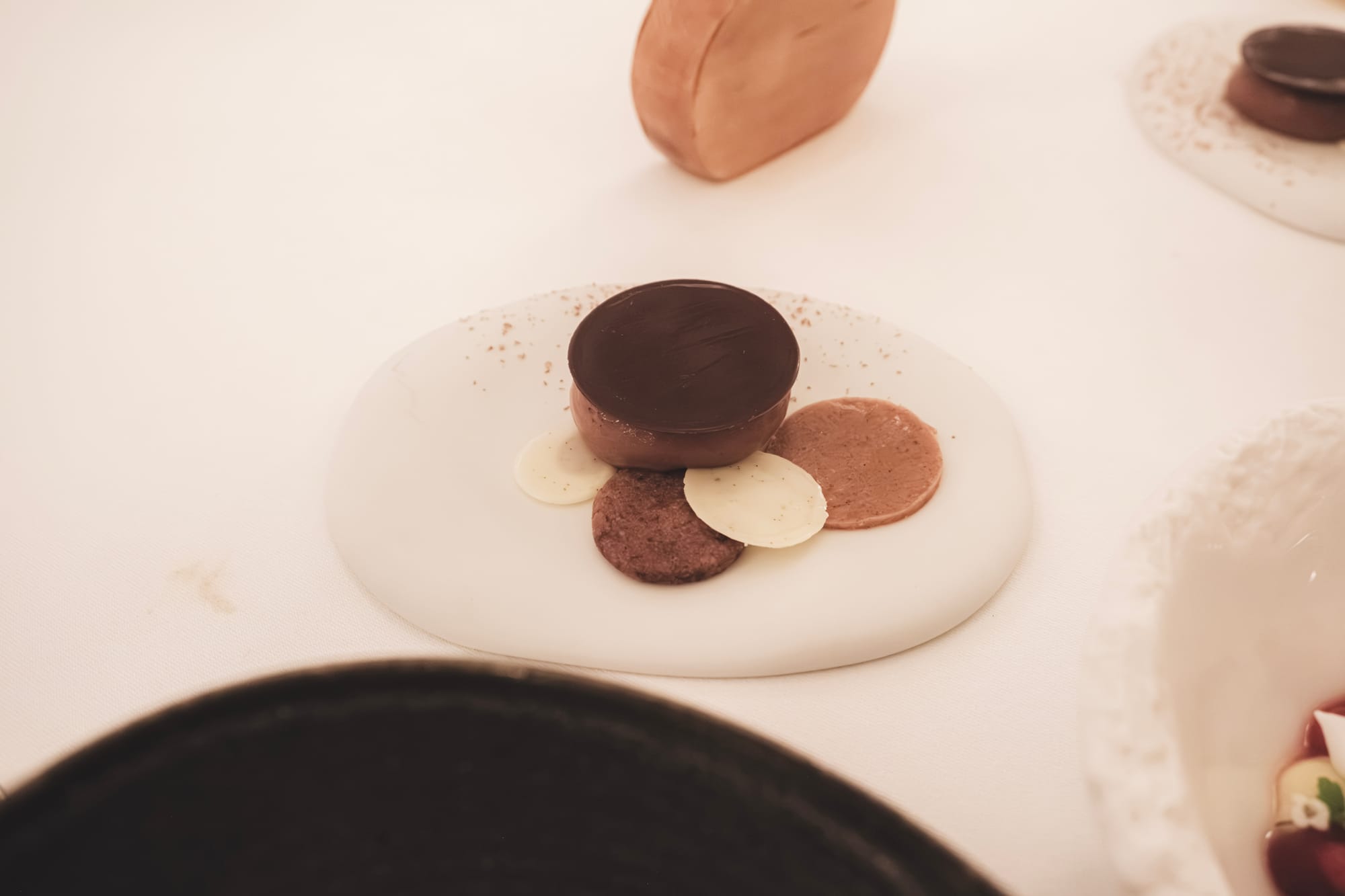
- From Joana: Brazilian chocolate, smoked vanilla
- Chocolates, cake pops, sweets and a jasmine infusion to close
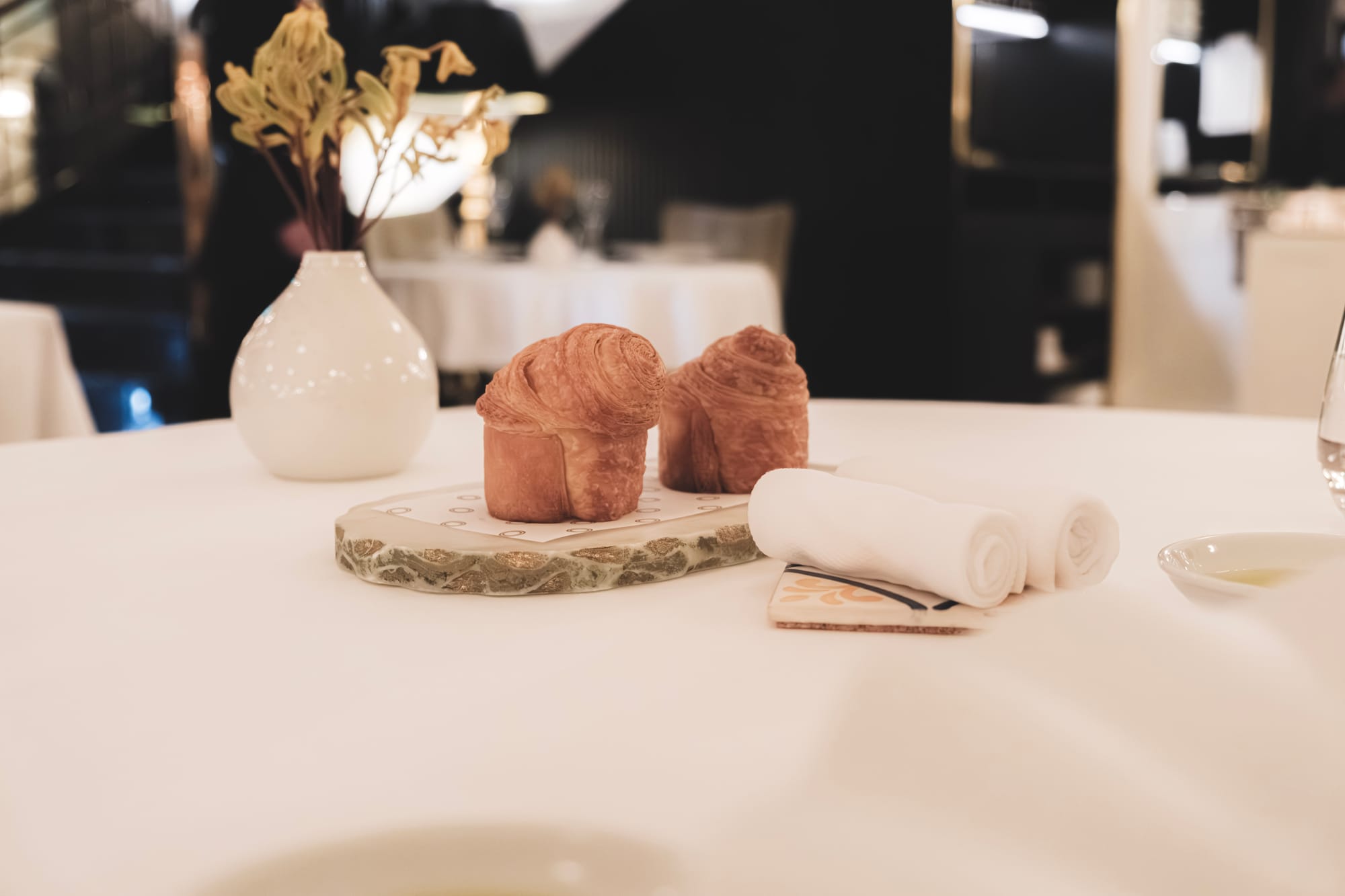
The meal opened with "Feeling Like a Portuguese": puff bread with salt flower: two golden puffs on a green stone slab beside rolled hand towels, a quiet bit of theatre before the first real course. They were extra pillowy and tasted like an elevated Korean salt bread.
The petit trois (Awakening of the Senses) arrived as a trio on three different stages. Two aubergine tartlets sat in dainty pastry shells over a dusting of dark powder, two rounds of octopus topped with white cream, pink pickled slivers and herbs perched on a speckled stone, and an organic egg came in its own shell, nested in hay inside a wooden bowl. The aubergine tartlets looked nothing like what I imagined, in the best way, and were easily the most artistic of the three.
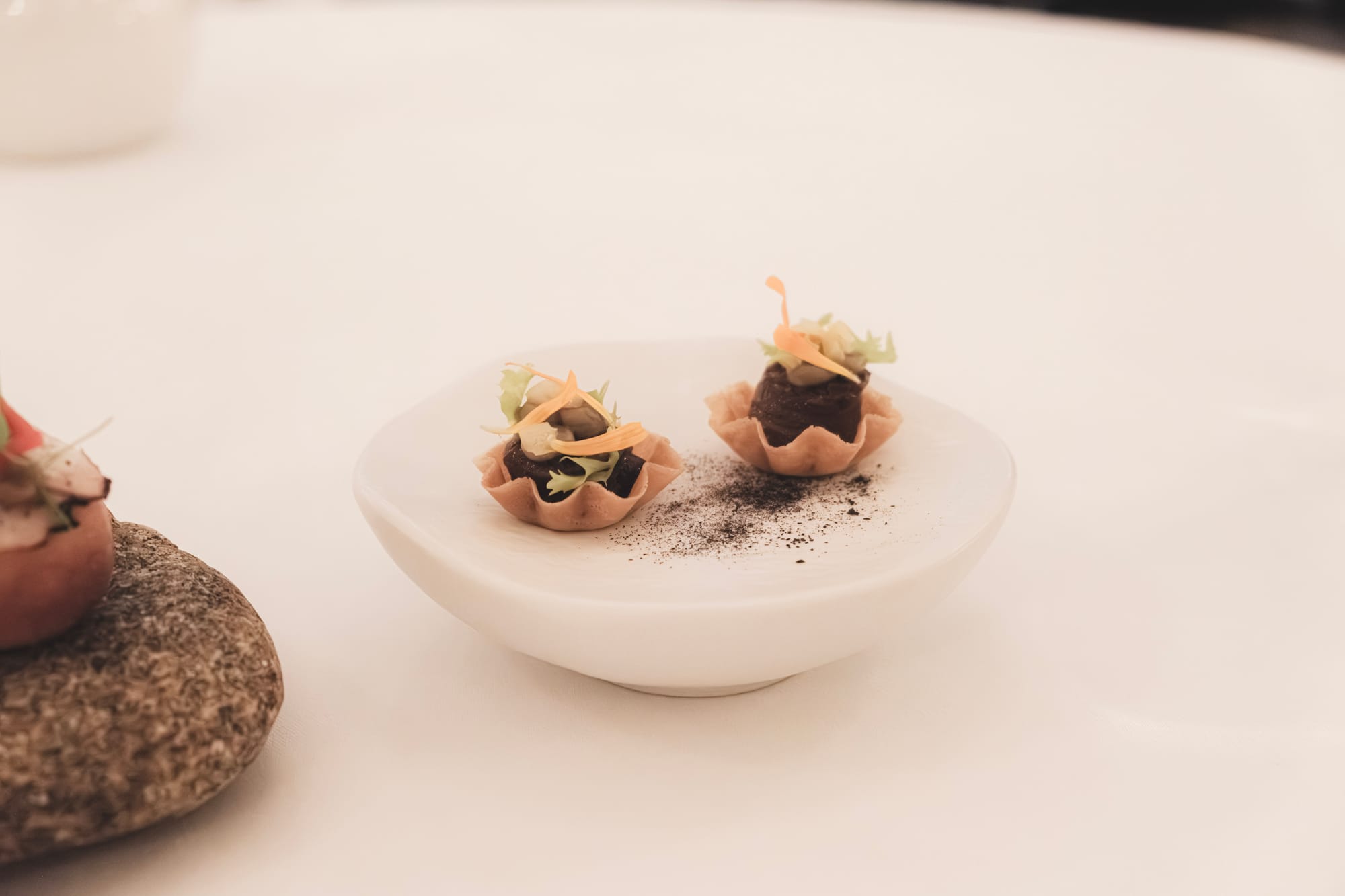
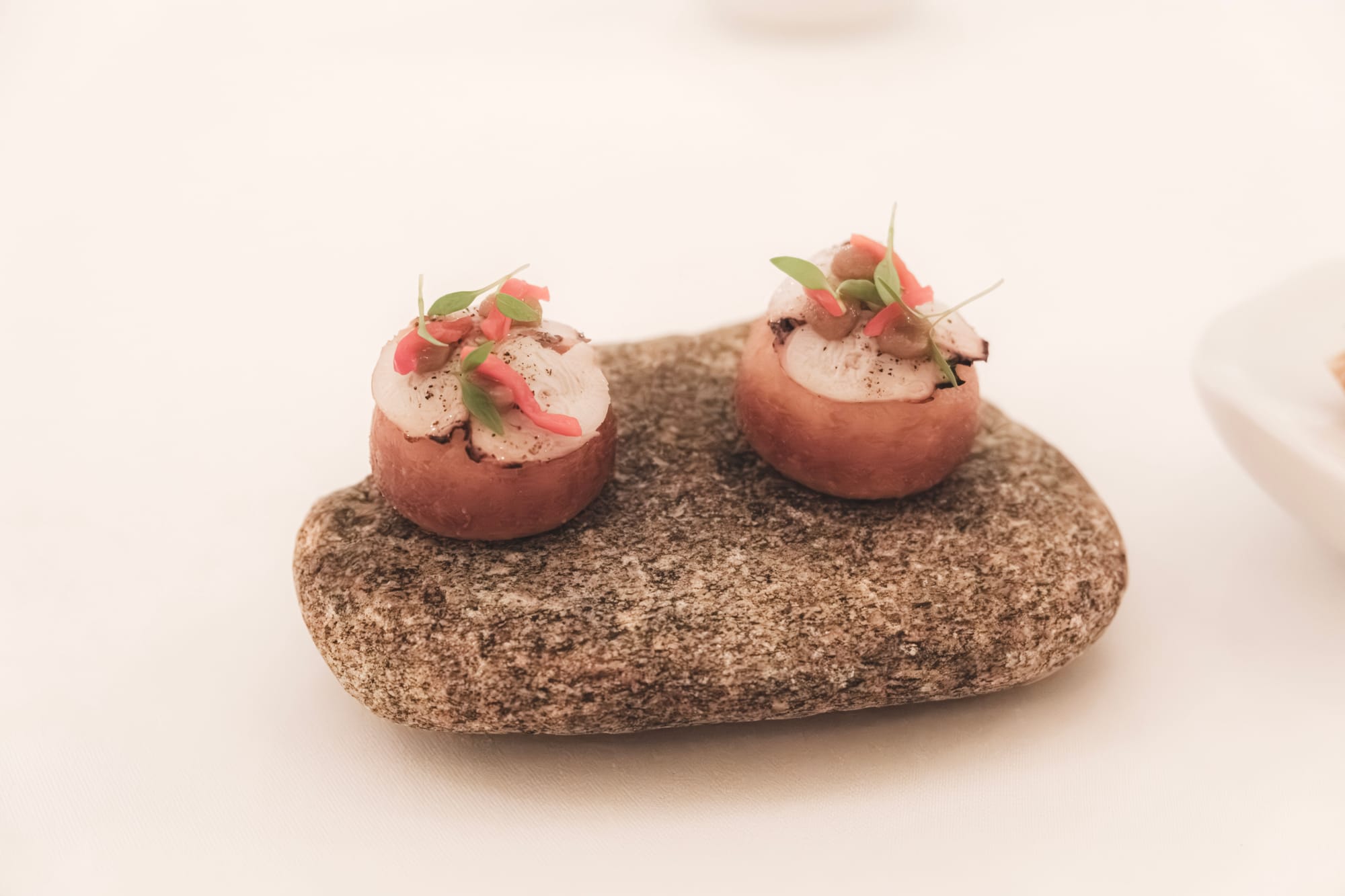
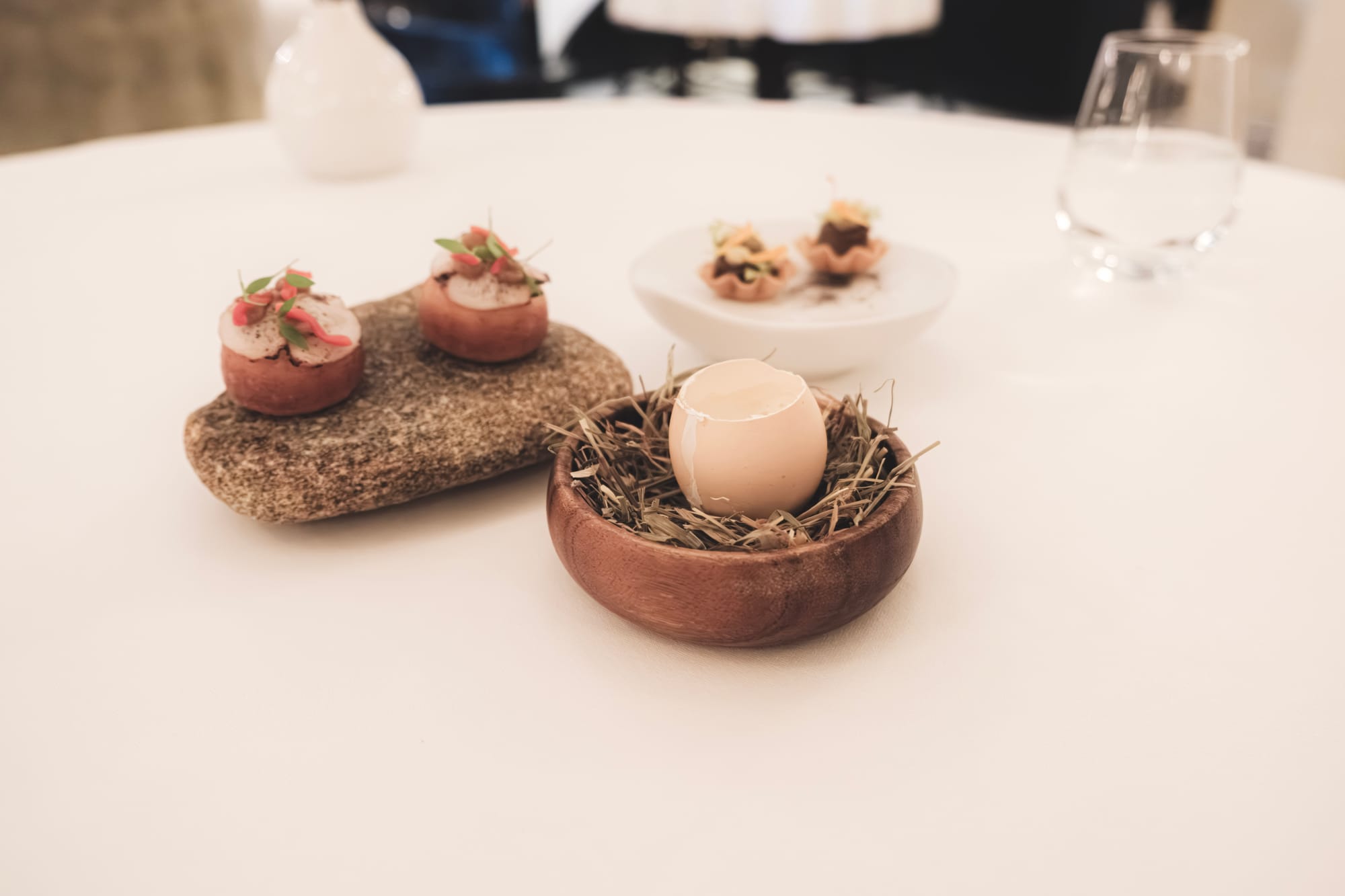
Le Monument in Porto: Petit trois (aubergine, octopus, organic egg)
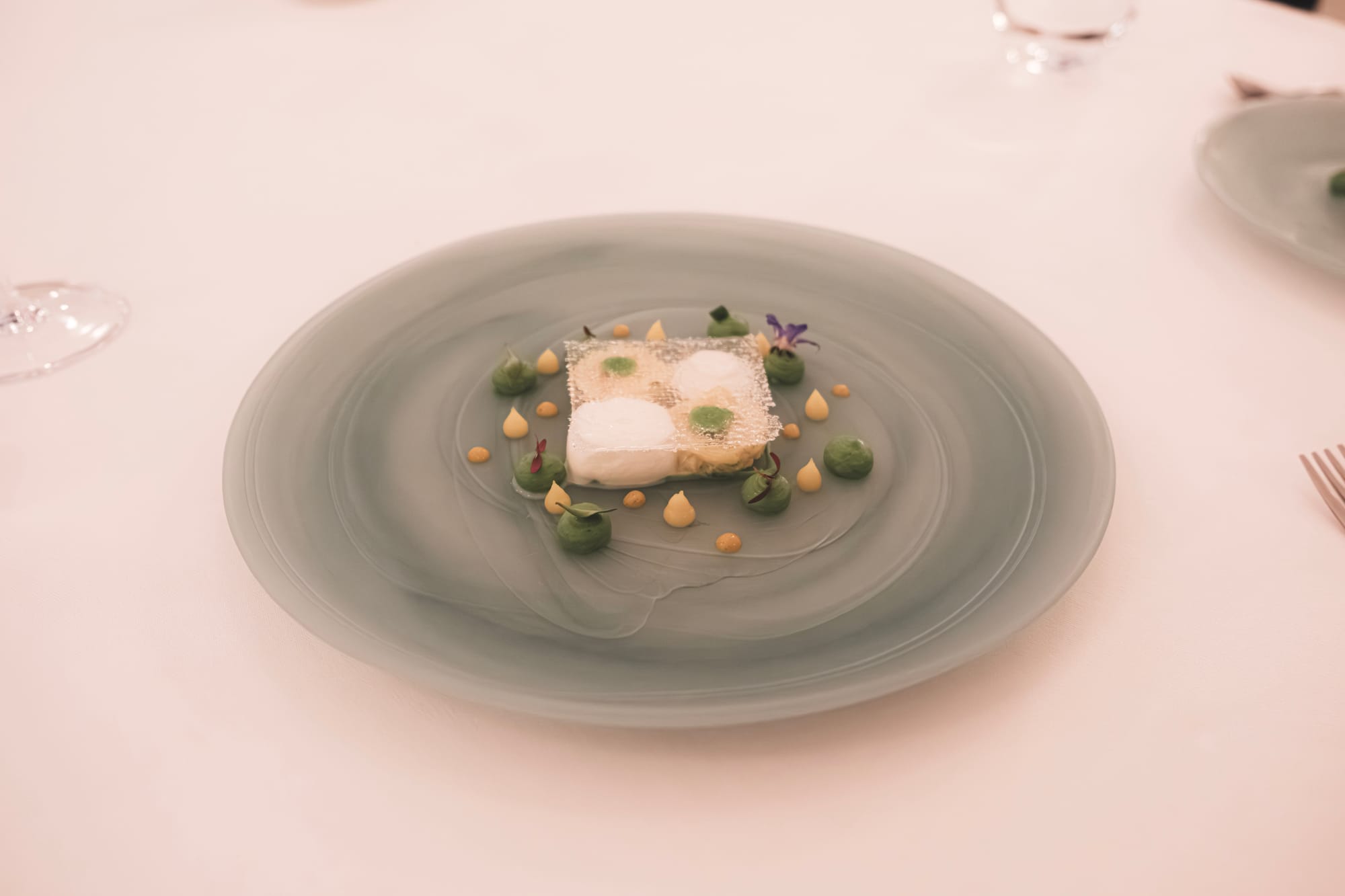
The first official stop, Vila do Conde, was a neat rectangle of edible crab under a clear jelly, scattered with dots of mustard yellow and herb green on a swirled slate-blue plate. This is the sapateira dish that reviewers cite as the chef's signature, so the bar was set early. The yuzu and Savora mustard added a lot of stimulation on the tastebuds, a jolt of sharpness against the sweetness of the crab.
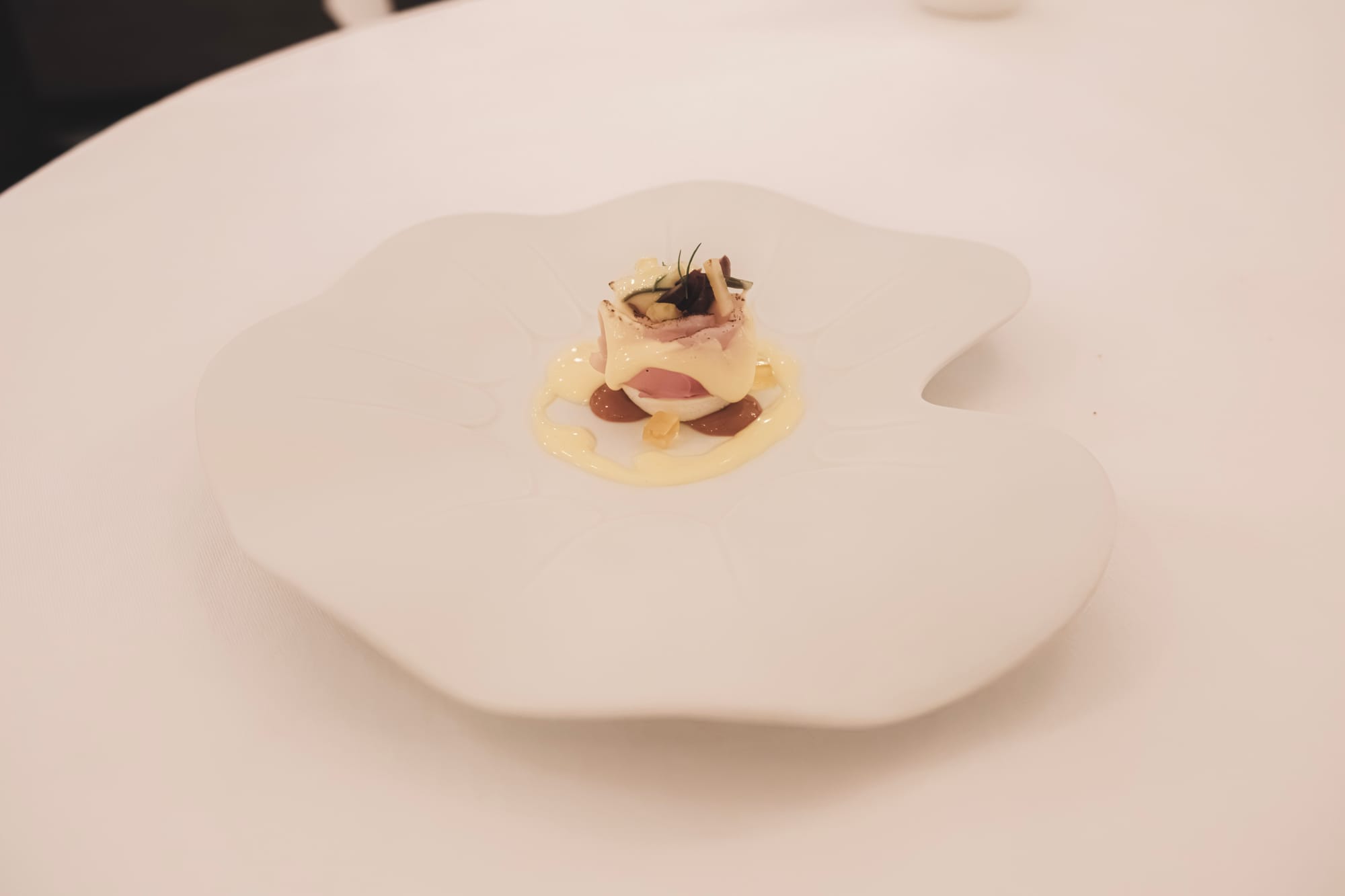
Portalegre brought the red snapper, a small stack of fish on a wavy white plate in a sauce the colour of late afternoon light, with a few dark specks around the edge. The saffron (credited on the menu to Lagar do Clavijo) was a light whisper that never overpowered the fish.
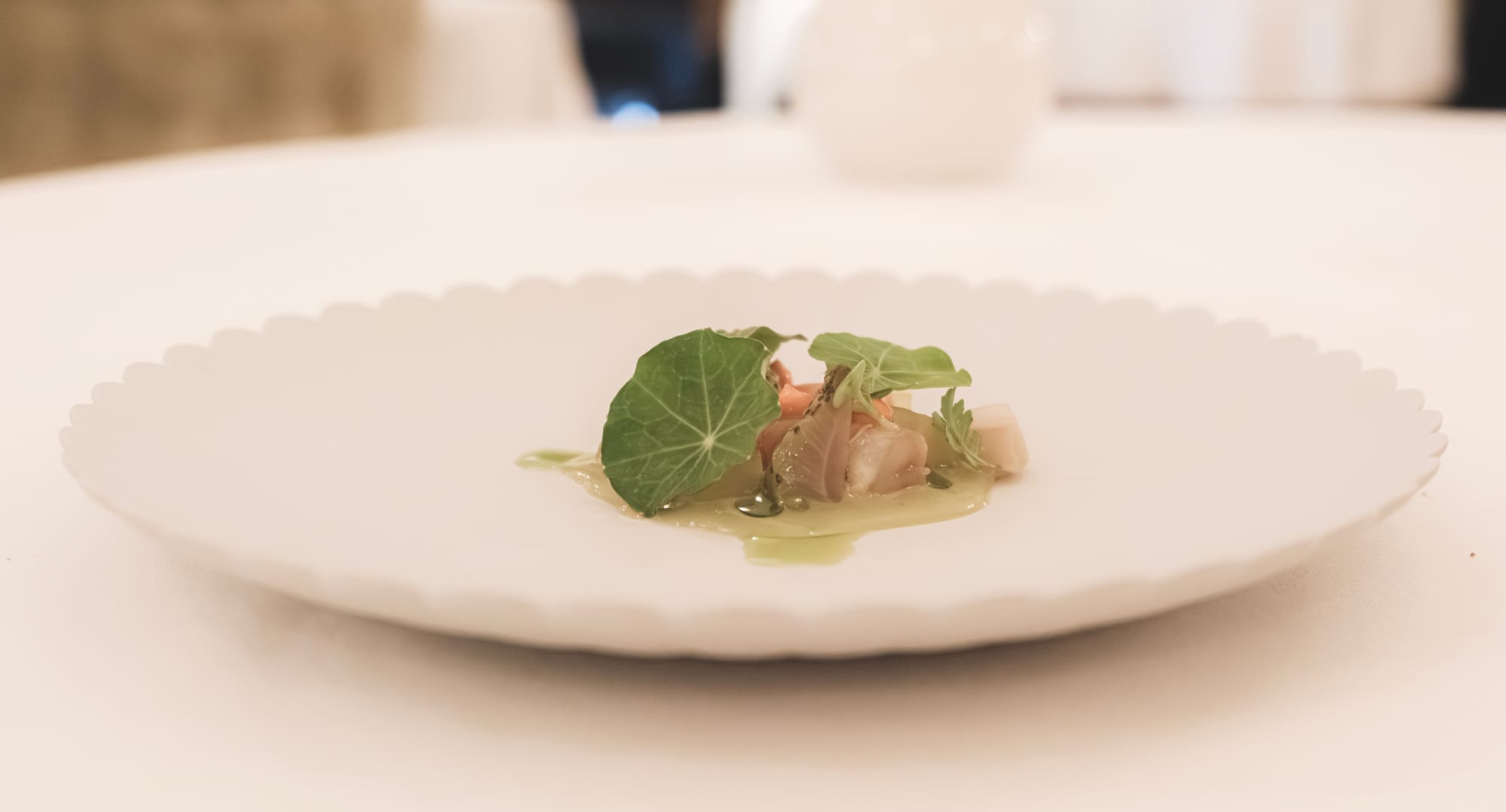
Algarve was the lightest-looking plate of the night. Pieces of violet prawn sat under a nasturtium leaf in a pale green curry broth on a scalloped white plate that looked like the edge of a seashell. The prawn was very bouncy and reminded me of spot prawn, a comparison that will land with anyone who has chased the BC season.
Then came Matosinhos, the stop that the rest of the menu had to answer to. The sardines came three ways. First, a tin of sardines in tomato, the can's lid still curled back, set on a patterned plate over a burlap mat and finished with pepper strips, mustard seeds and herbs. Second, a sardine pâté on a crisp round biscuit, served on a blue ceramic sardine. Third, a sardine bruschetta in a black bowl of pebbles. The tin theatre translated to flavour, and the reason was the tomato sauce, which had the most umami of anything I ate that night.
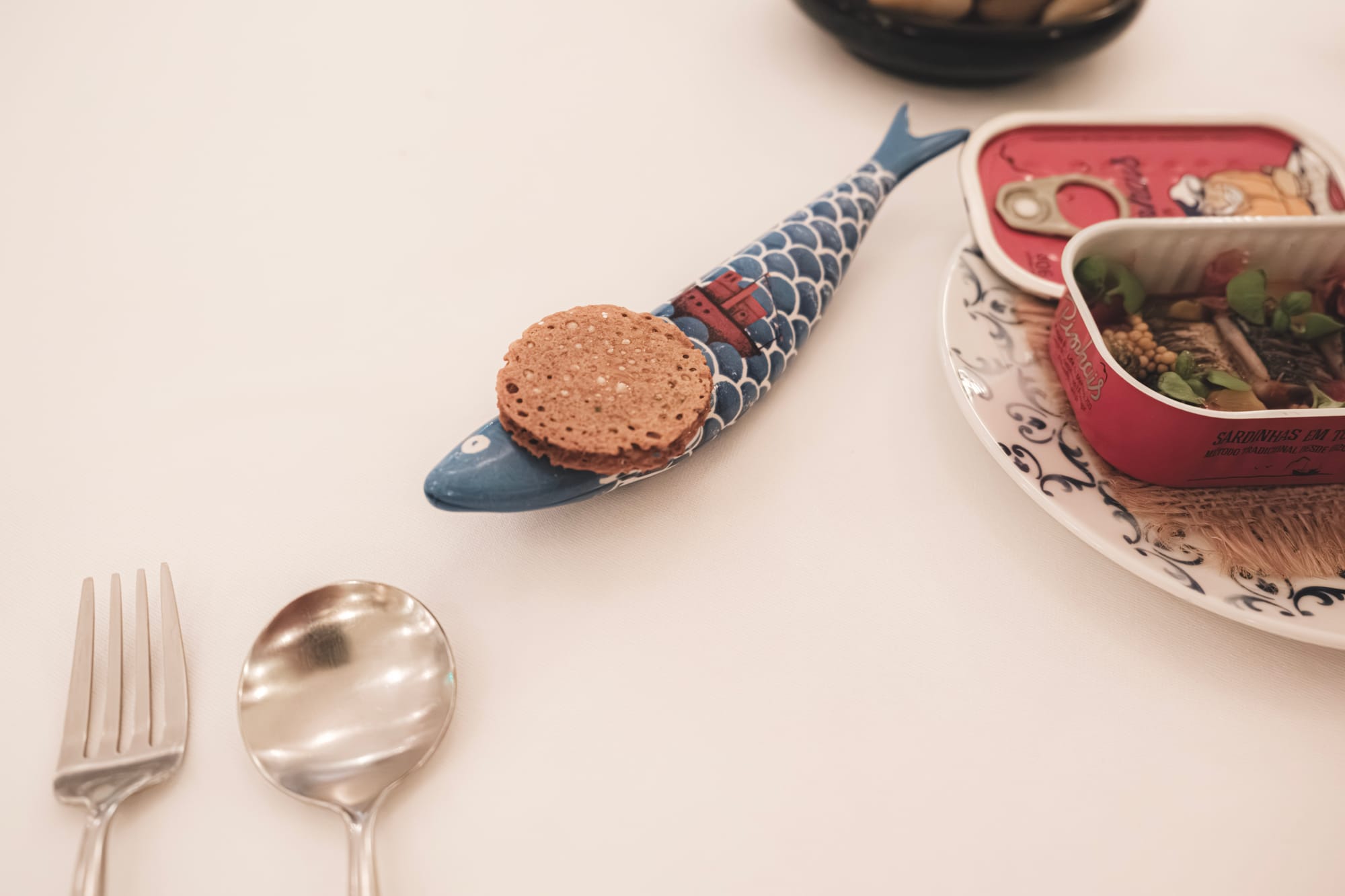
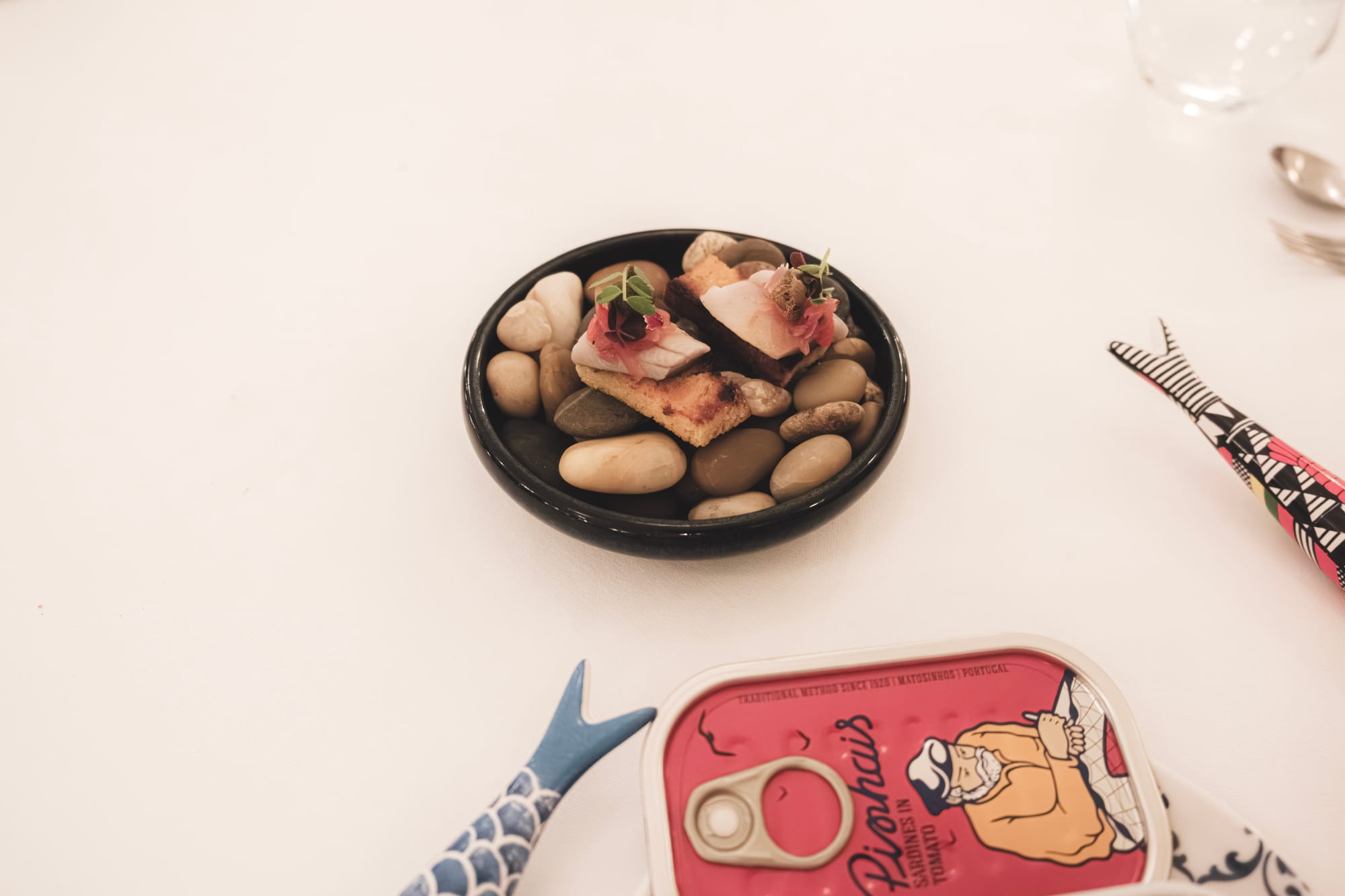
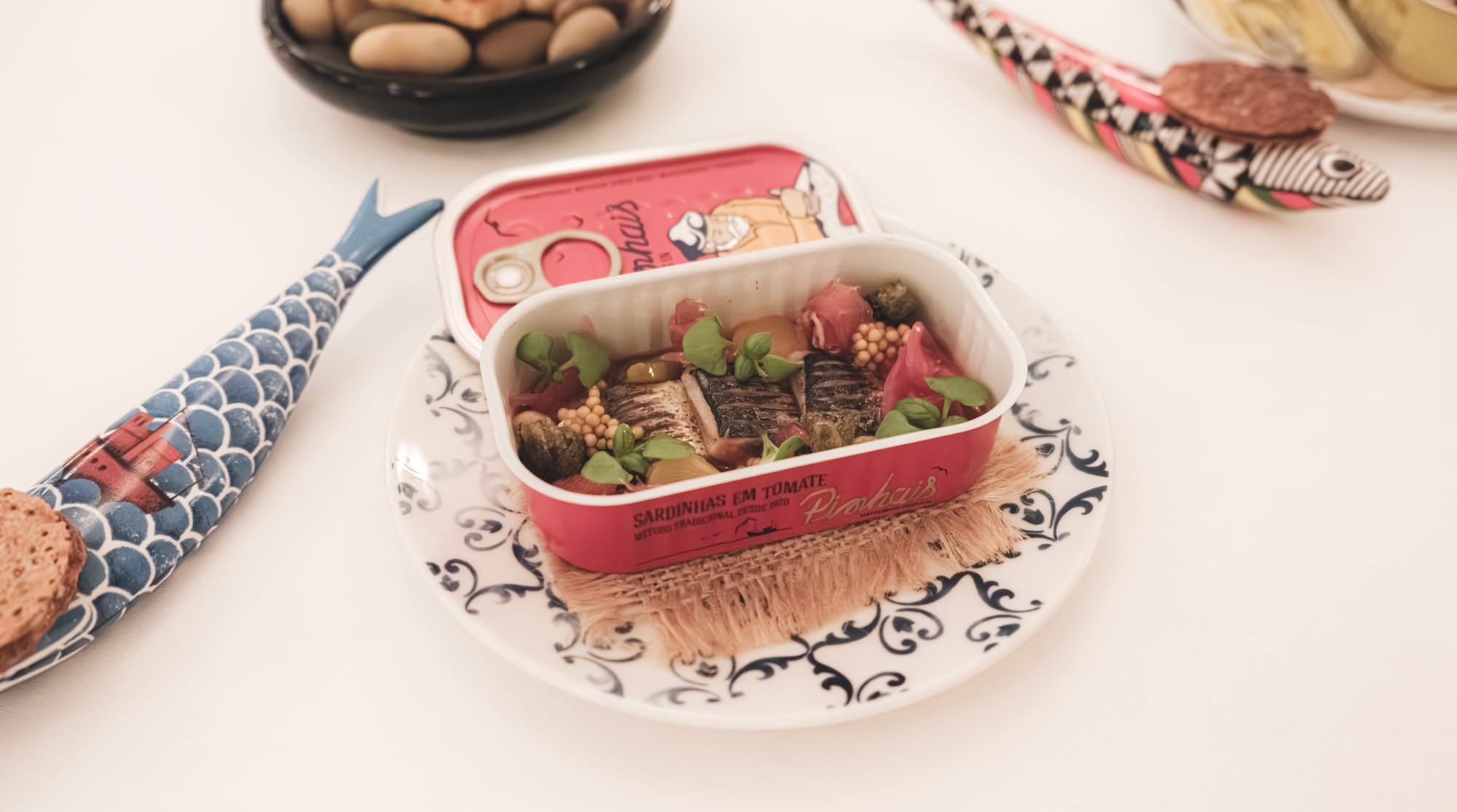
Le Monument in Porto: Sardine trois
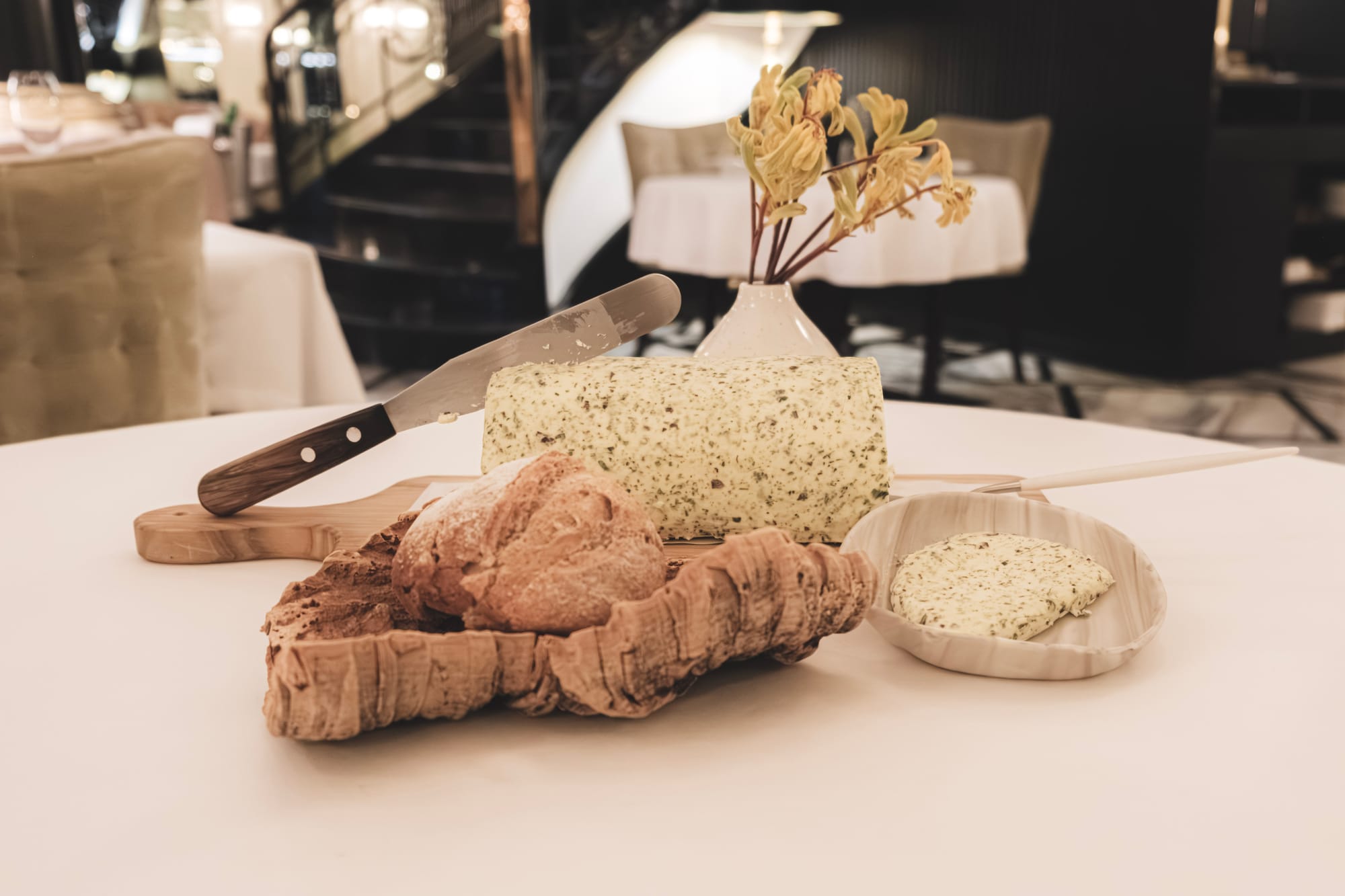
Midway through the menu, a bread course appeared: a rustic round loaf in a basket lined with what looked like crinkled bark, alongside a bar of herb-flecked butter and a small dish of the same. The bread was good enough that I can back it up with a fact: the kitchen refilled the basket once. The butter display was very impressive too.
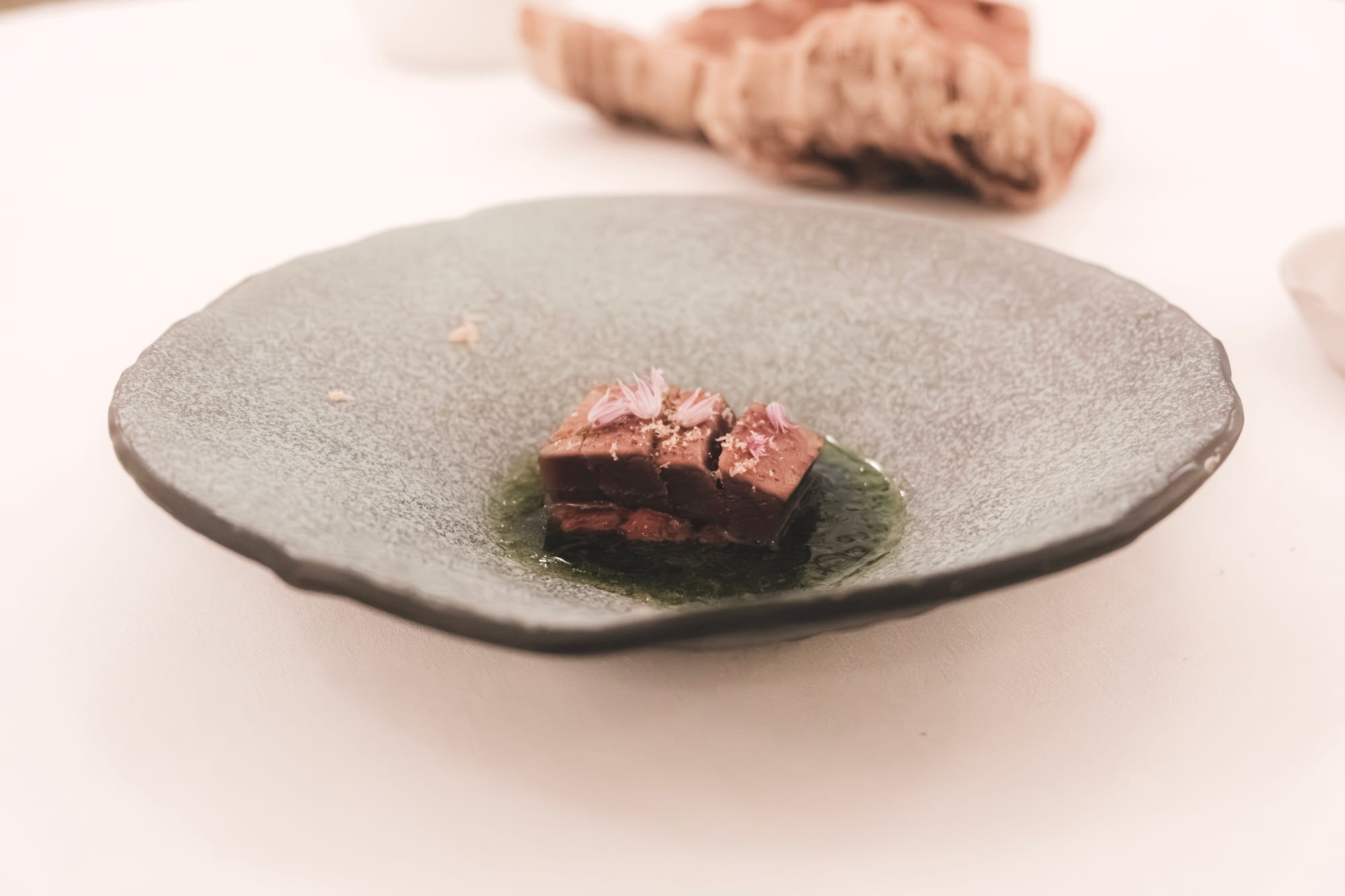
Madeira was bluefin tuna cut into ruby cubes, stacked in a bright green pool in a grey ceramic bowl and finished with pink petals. The mouthfeel was insanely meaty for something I had always filed under seafood.
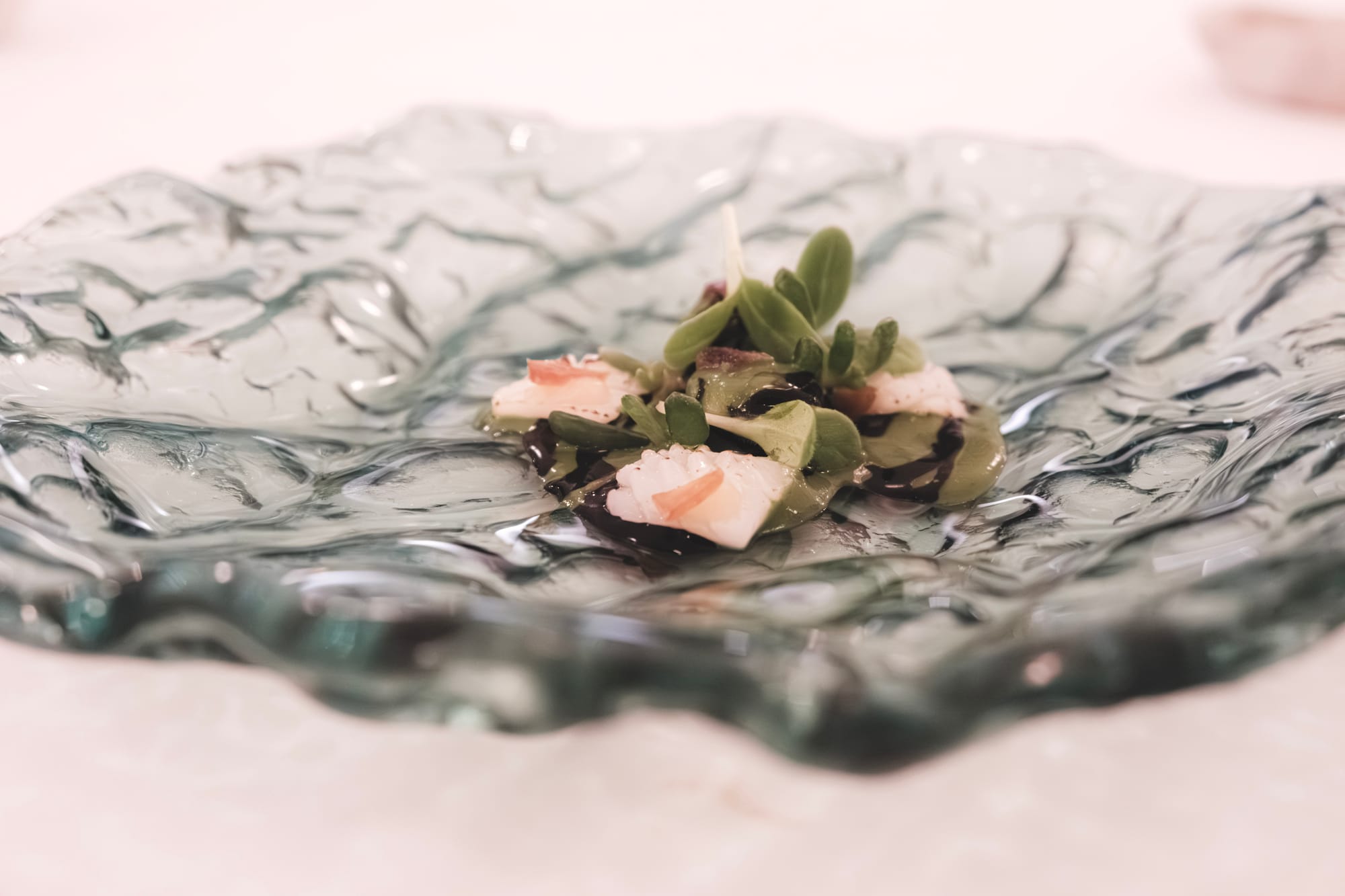
Açores came on a rippled green glass plate that looked like seawater caught mid-wave: pale pieces of giant squid tucked among fetticus (lamb's lettuce) over a dark ink sauce.
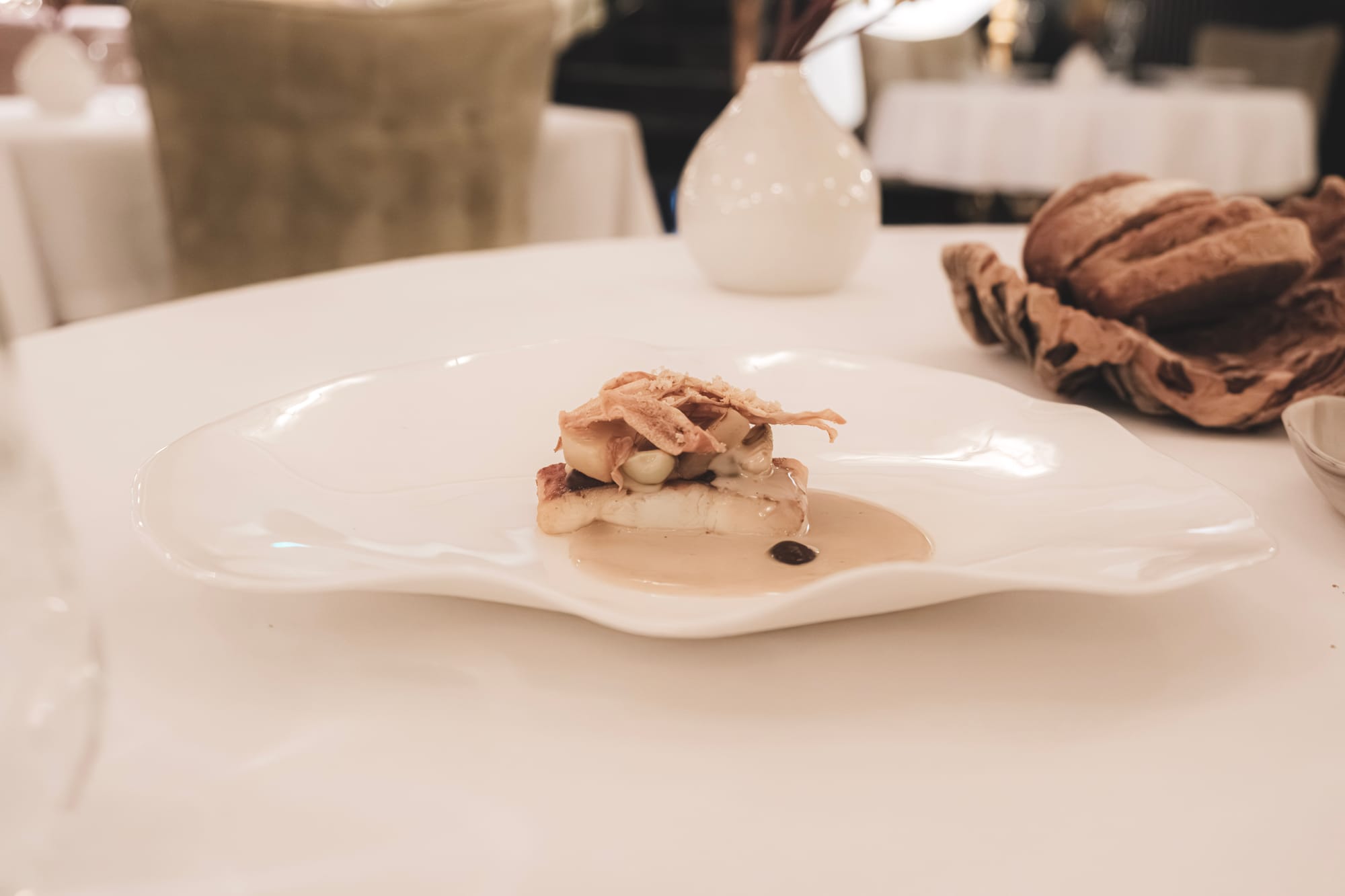
Peniche was a neat fold of sole topped with crisp slivers of artichoke, sitting in a pale café au lait sauce dotted with dark droplets on a wavy white plate. The coffee had an almost chocolatey flavour, which made me think this was the French version of a Mexican mole.
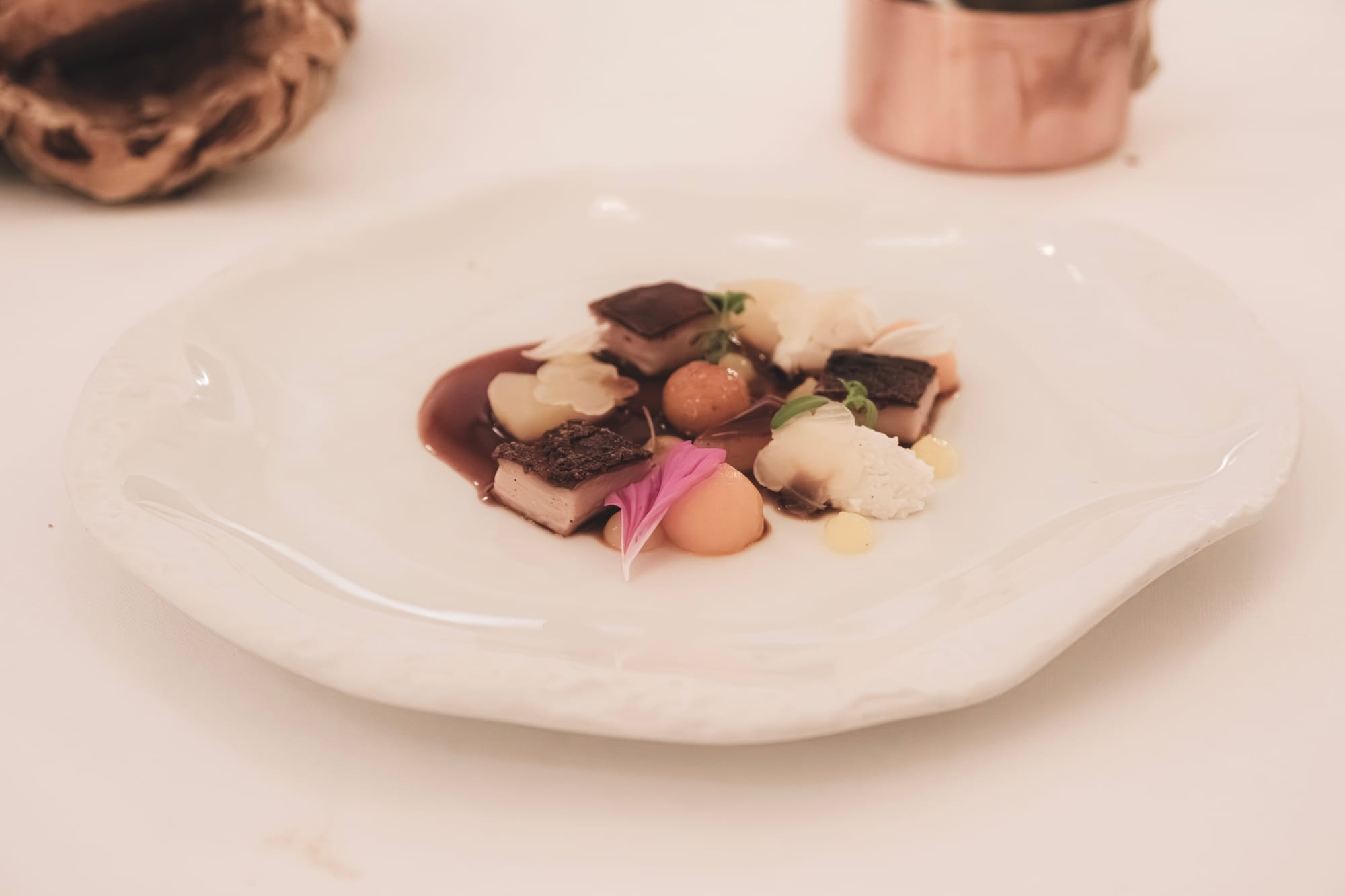
Bairrada is the region that made roast suckling pig (leitão) its calling card, and the kitchen's take arrived as squares of pig with skin burnished almost chocolate brown, scattered among amber spheres and dollops of curd cheese, with a single pink petal and a glossy dark jus pooled underneath. The dining room was so quiet that we could hear the crispy skin crackle as we chewed.
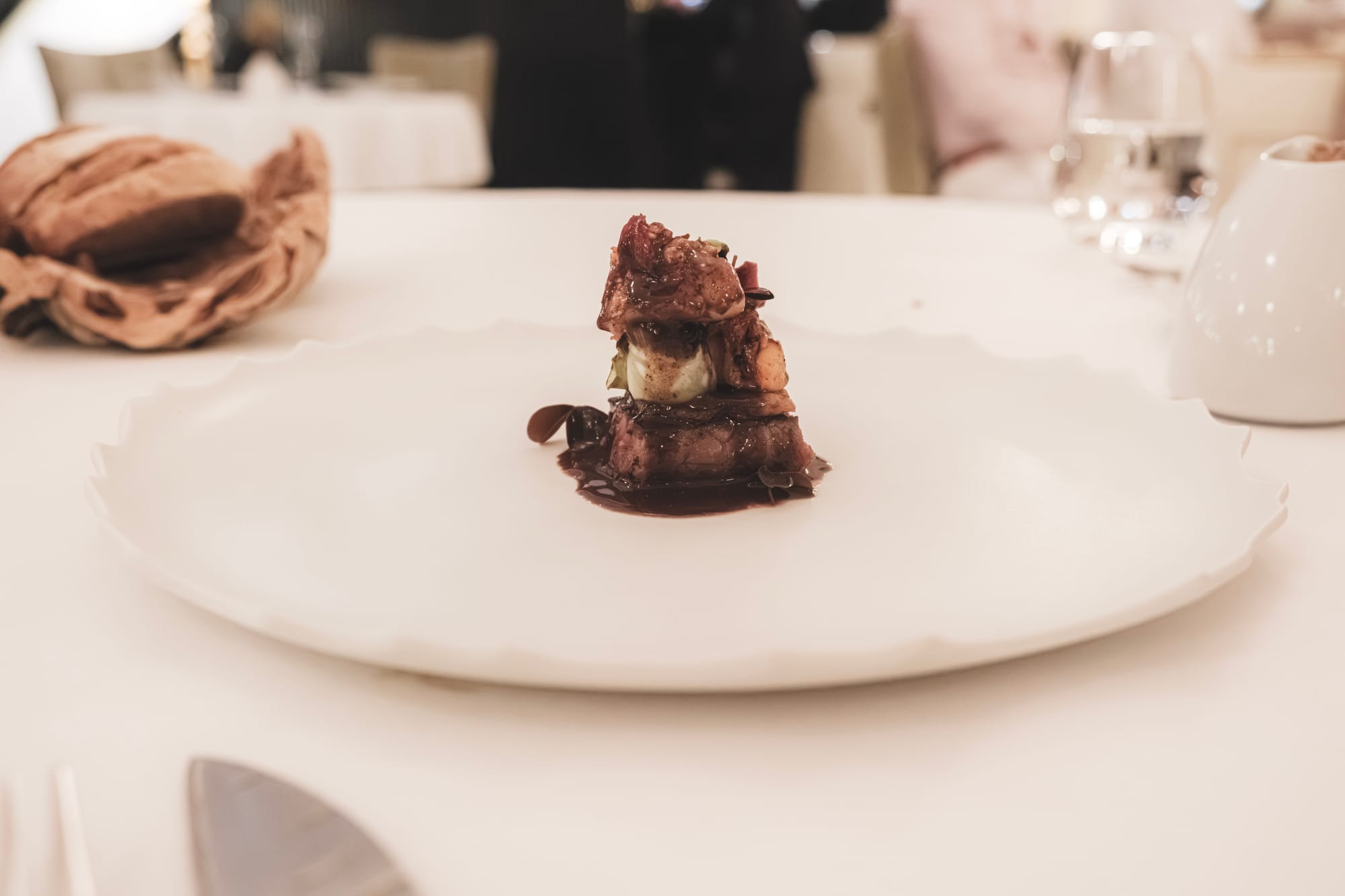
The final savoury stop, Douro, was a tall, tidy stack of autochthonous sirloin and blue lobster crowned with greens and sitting in a glossy red wine reduction from the Douro.
Then came the sweets, credited on the menu to pastry chef Joana Thöny-Montbabut. The organic strawberries from the Douro arrived in a textured white bowl: a pale ring with a ruby centre, ripe berries, mint leaves and pink beads, with verbena on the menu line. The berries had a very succulent sweetness.
Honey from our hive was the most whimsical plate of the night: a chocolate bee with striped white and black segments and translucent wings, resting in a black bowl over a dark pool and scattered petals. The honey was drizzled straight from a honey wand over the bee, which made for a fun drizzle, even if it started weighing down one of the bee's wings.
The Brazilian chocolate with smoked vanilla was a glossy chocolate disc on a plate with biscuit rounds and white chocolate discs. The bitterness was strong, and that was a good thing, since it cut through the sweeter desserts around it.
The closing parade kept the theatre going: two small leaf-wrapped chocolates on a piece of cork bark, two pink cake pops standing in a wooden block, and a wooden tray of glass jars holding what looked like dried herbs, rose petals and dried fruit, each topped with a little sweet. My favourite of the lot was the jasmine tea, which a server in a bow tie brewed tableside in a glass siphon. I had only ever seen siphon brewing used for coffee, so it was kinda cool to watch the same technique turn tea into a show.
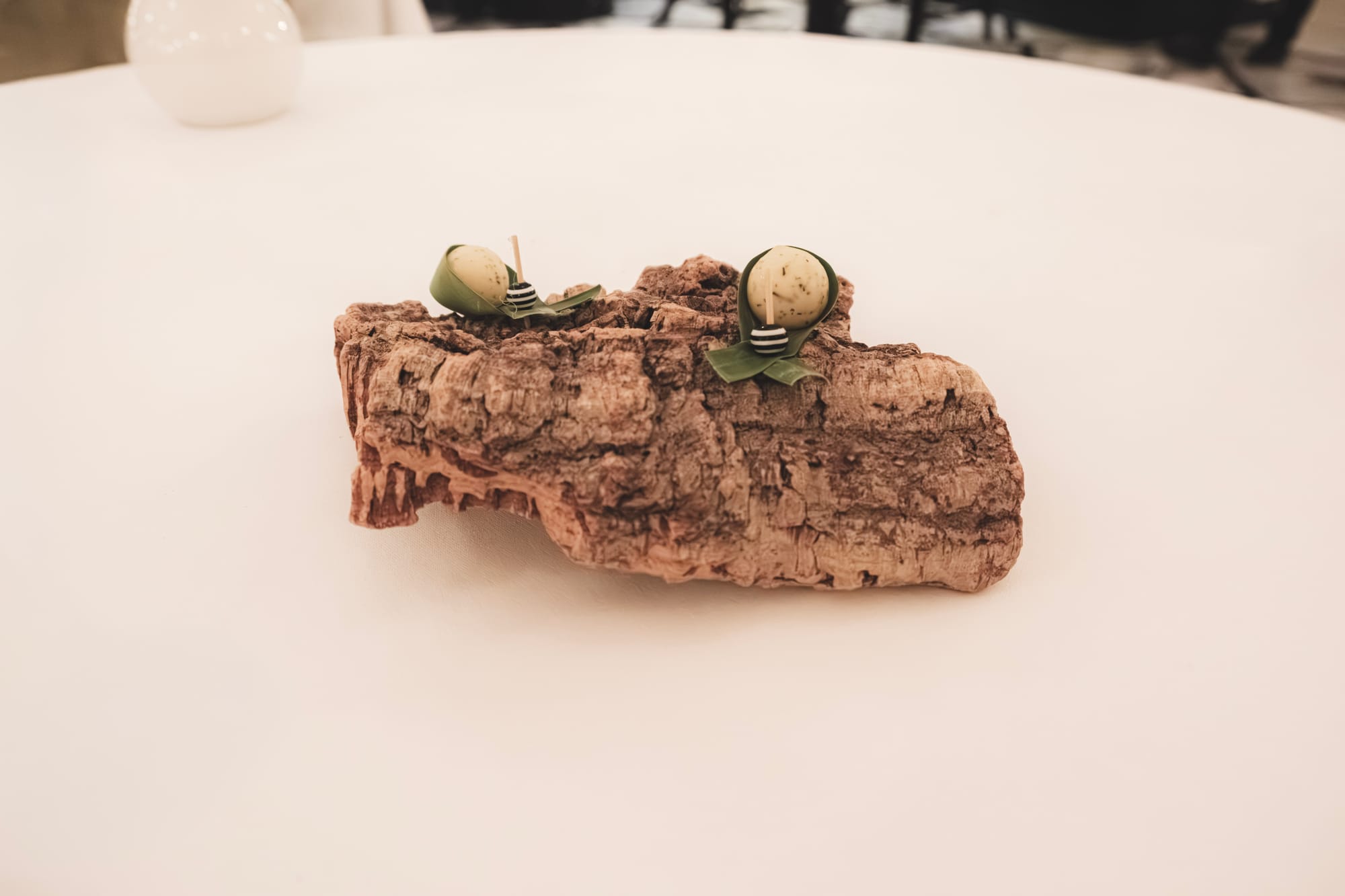
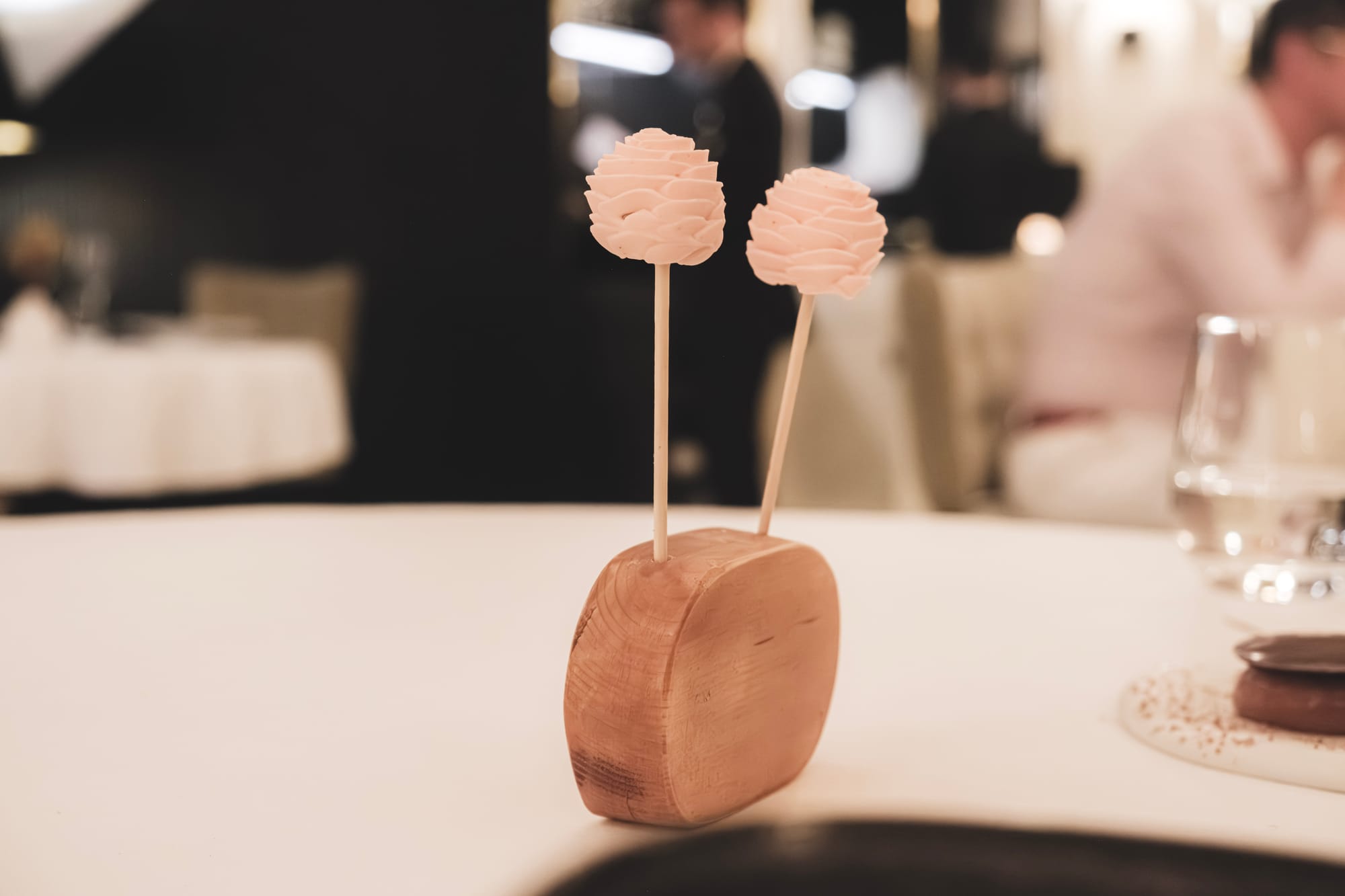
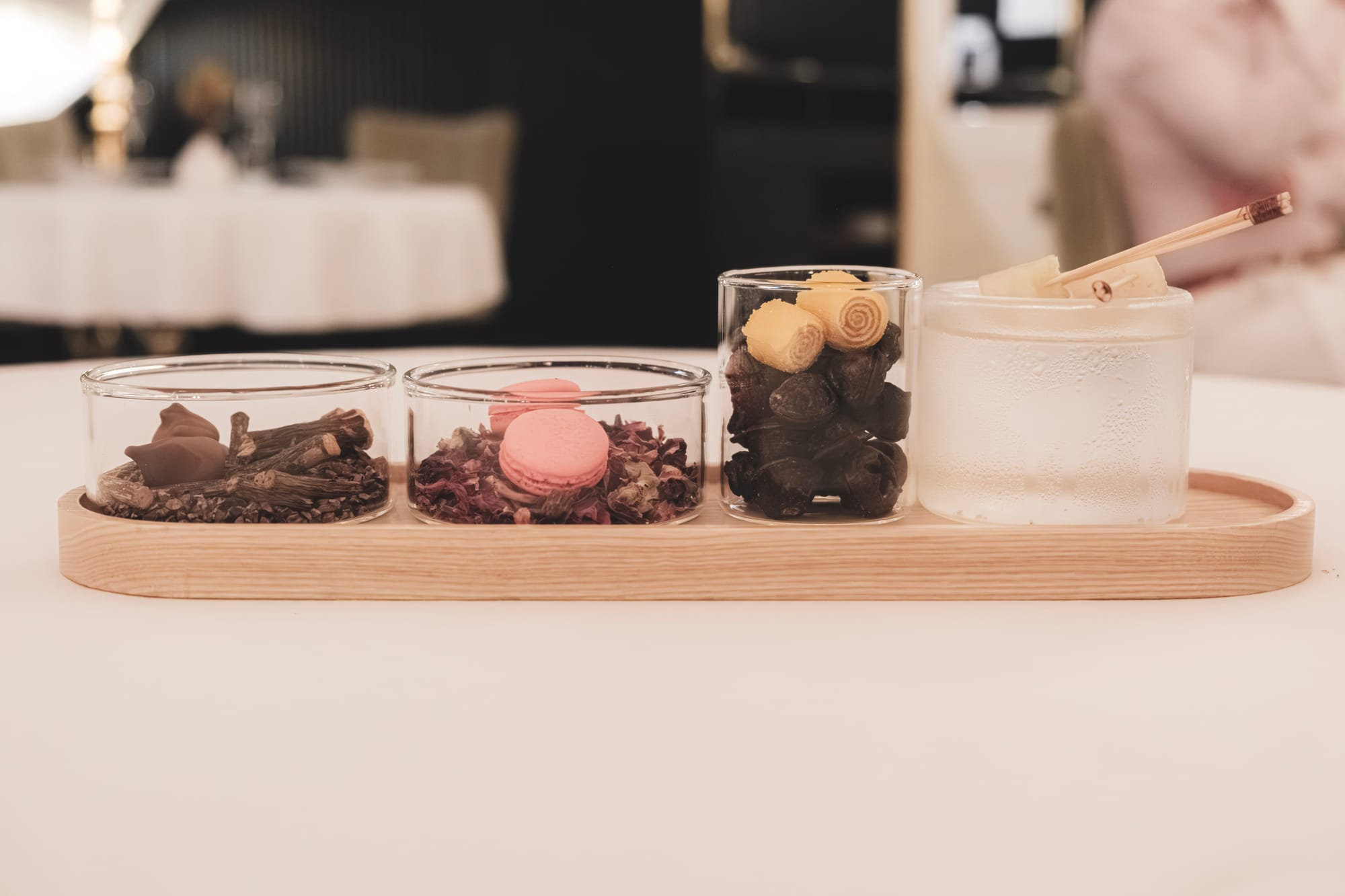
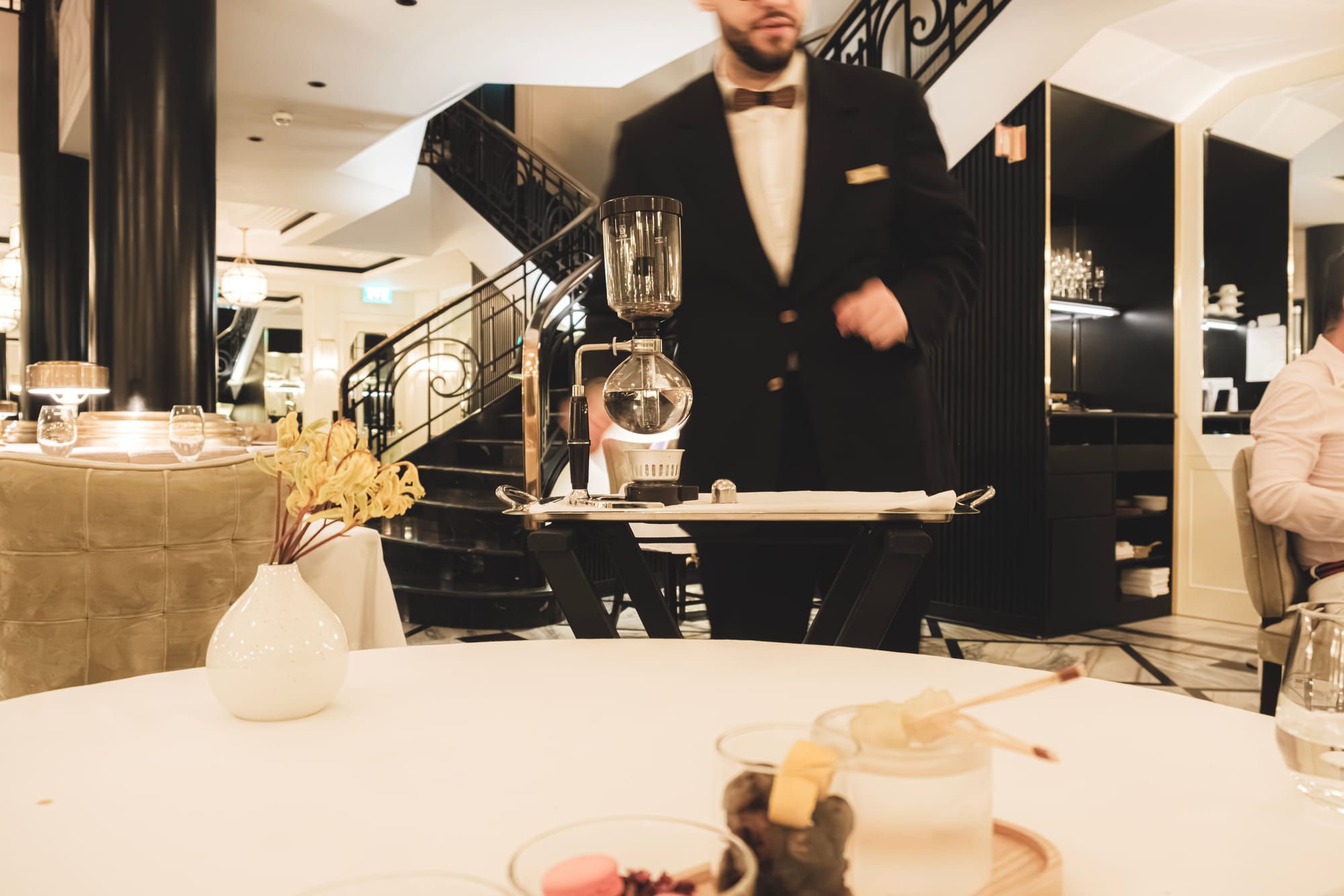
Le Monument in Porto: Closing Parade
Drinks
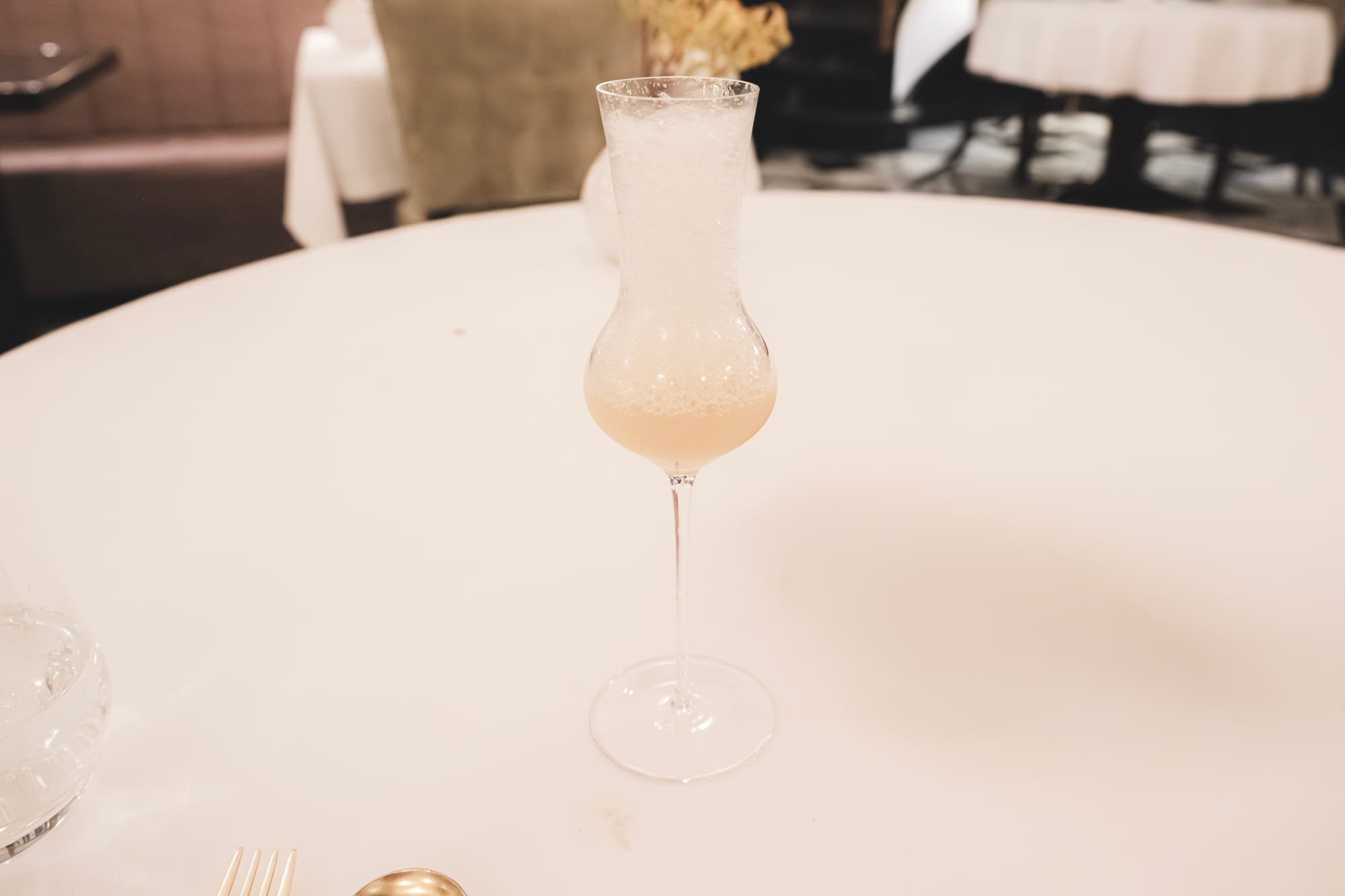
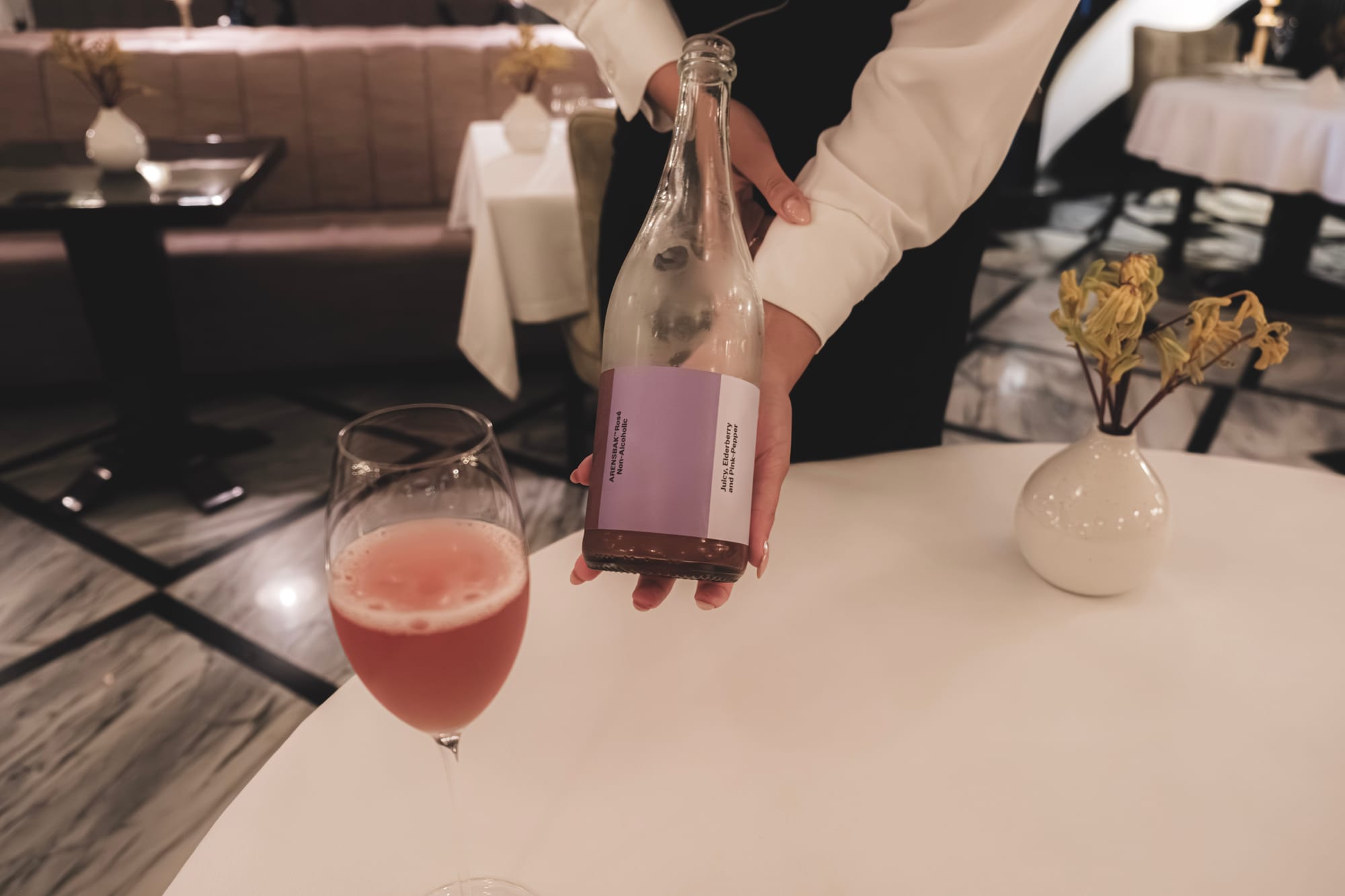
I had the non-alcoholic rosé, which the server presented by showing the bottle at the table before pouring (the label read elderberry and pink pepper). It tasted just like the real thing. I ordered just the one drink, knowing I didn't have the stomach capacity for a full drink pairing alongside the meal. For reference, the full wine pairing with the Grande Viagem is €160 per person, and a non-alcoholic pairing is available.
Ambiance
Le Monument lives inside The One Monumental Palace, one of the most famous hotels in Porto. It's a five-star, neoclassical building on Avenida dos Aliados, completed in 1923, and the restaurant carries that grand-hotel gravity into its dining room without feeling stuffy.
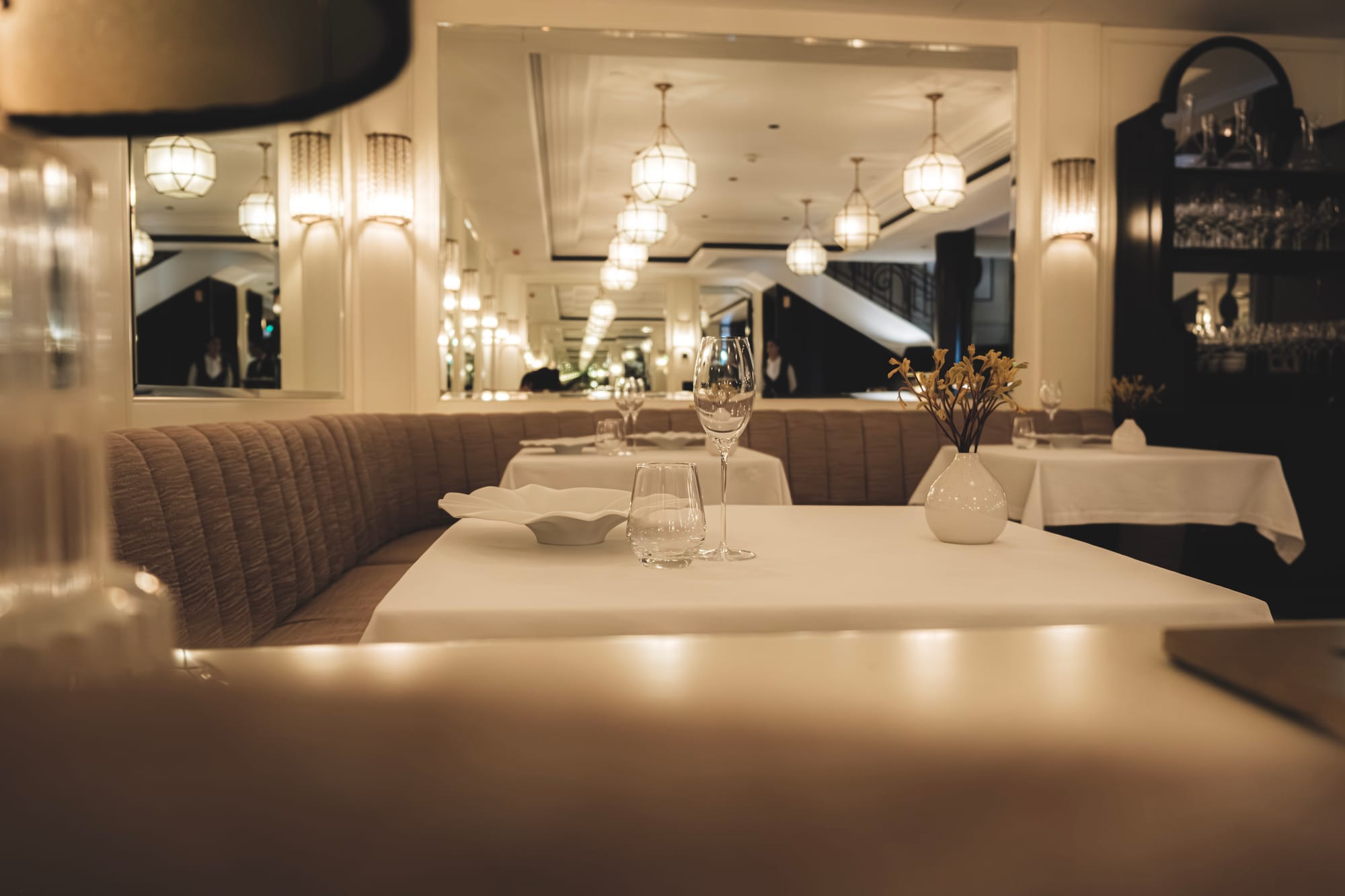
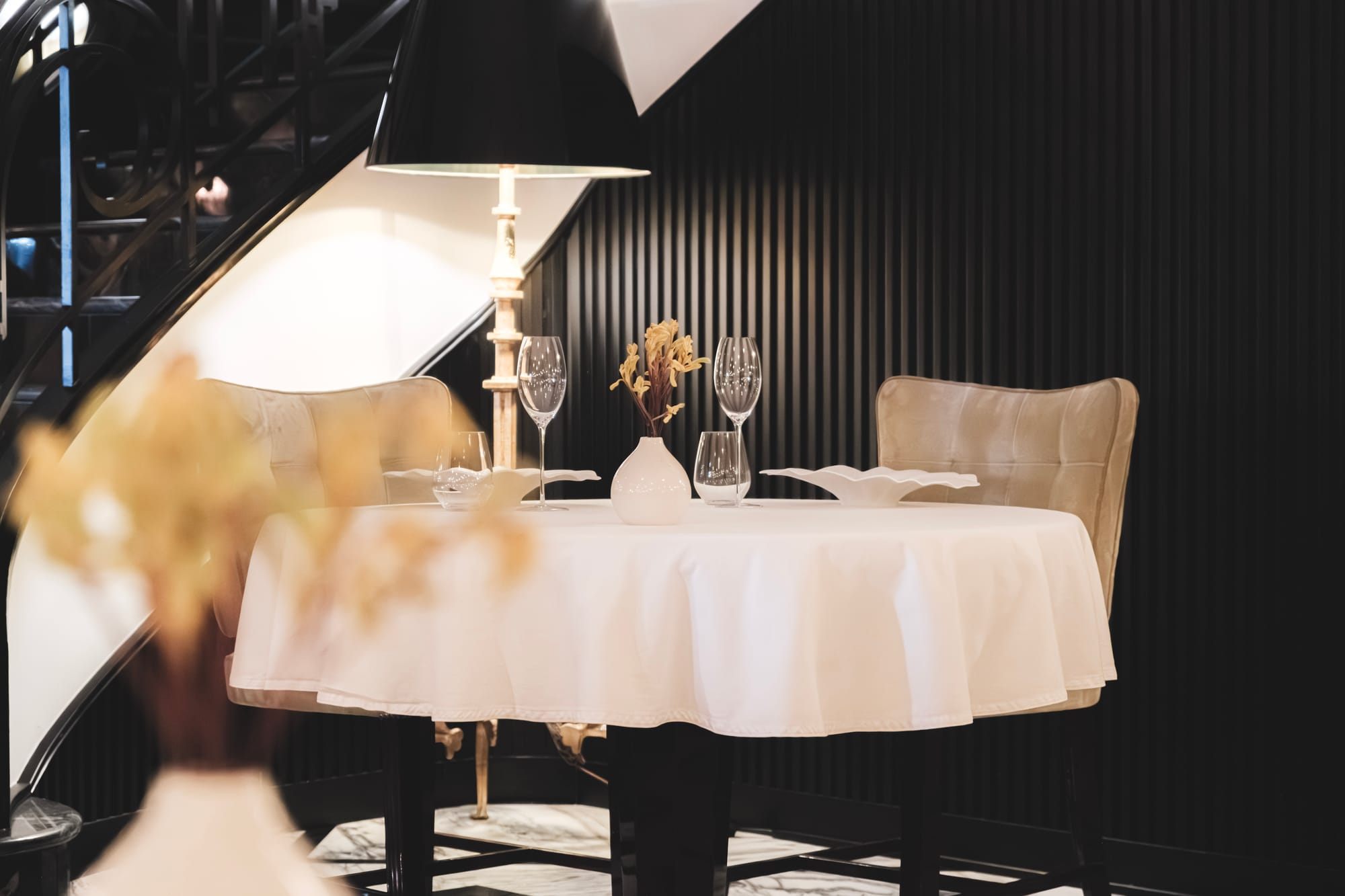
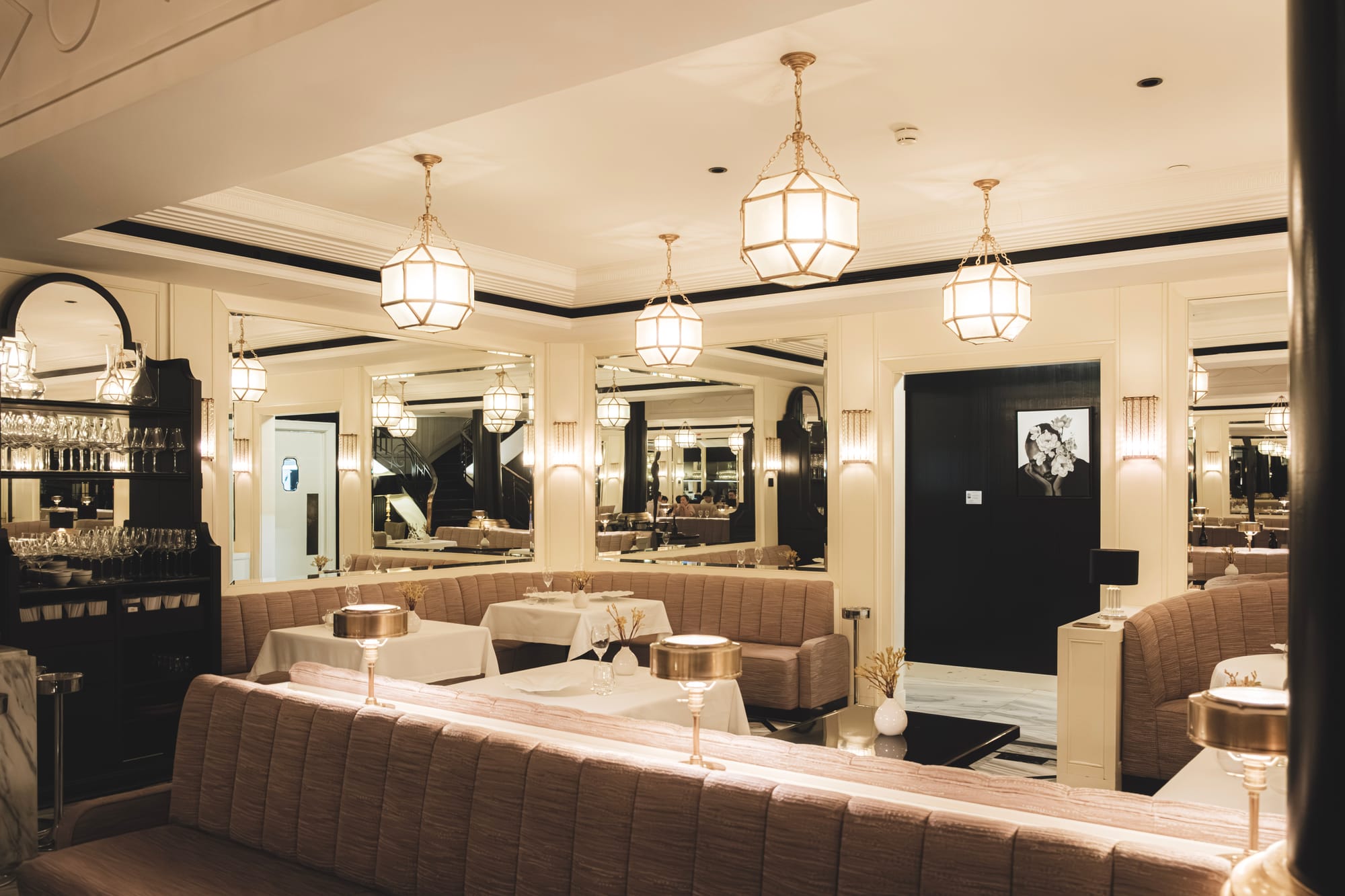
The room is Art Deco in the old-money sense: blush and taupe channel-tufted banquettes running along the walls, round tables dressed in white linen, and a small vase of dried golden blooms at every setting. Octagonal glass lanterns edged in brass hang from the ceiling, mirrors double the room, and black columns and fluted black wall panelling keep everything grounded. A sweeping staircase with a wrought iron balustrade curves through the center, and the floor is black and white marble with geometric inlay. The lighting stayed low and warm, with brass table lamps glowing along the banquettes.
It was so quiet you could hear a pin drop. There are about 25 tables, which I'd estimate seats around 80 guests, plus a central area that for some reason has banquette seating but no tables. The restroom is out in the hotel lobby, and staff waited attentively by the restaurant door to let guests back in, a small touch that I appreciated.
Service
A guide met us at the start, gave a quick rundown of the regions of Portugal that the menu would touch, and then led us through the kitchen to meet the chef before seating us at our table. It's the kind of opening that tells you the restaurant takes the "journey" concept seriously. The pacing was pretty normal for European standards, and we finished in about 2.5 hours.
The server knew every detail of every ingredient, and would probably have known the farmers too had we asked. I liked how the servers genuinely kept themselves busy when nothing was happening, since it can get a little awkward in quiet restaurants when staff are just waiting for something to do. The personal touches were there as well: the tableside siphon brewing of the jasmine tea, and a full set of tools to spot-clean even the tiniest crumbs from the table between courses.
One thing left me curious. During our weeknight meal there were maybe 3 tables seating a total of 10 guests, which does not seem like enough to sustain the restaurant's operations. I'm genuinely wondering how Le Monument is doing financially, but maybe the restaurant is just one piece of the hotel's business strategy. There was no service charge, and gratuity was neither included nor expected.
Final Thoughts
One-liner: A culinary trip around Portugal from the comfort of your seat.
Highlight: Sardine Trois (the tin is half the fun, and the tomato sauce is the other half)
Price per person: About €195. Cheaper than fine dining in Lisbon but still just as tasty
Would I go back? Yes. A theatrical menu, a calm room, and a table available the day before make this an easy one to say yes to.